
Wat Phra Mahathat Woramahawihan
Southern Thailand’s First UNESCO World Heritage Site
In the heart of Nakhon Si Thammarat stands a sacred landmark that has witnessed the passage of kingdoms, cultures and generations of faith. Wat Phra Mahathat Woramahawihan is more than an ancient temple—it is a living expression of Southern Thailand’s spiritual and cultural identity.
On 25 July 2026, the temple was officially inscribed on the UNESCO World Heritage List, becoming Southern Thailand’s first World Heritage Site, Thailand’s sixth Cultural World Heritage Site and the country’s ninth World Heritage Site overall.
With roots reaching back more than 1,500 years, Wat Phra Mahathat Woramahawihan has long served as one of the most important Buddhist centres in the region. Nakhon Si Thammarat once stood at the crossroads of maritime trade between the Indian and Pacific oceans, welcoming religious and artistic influences from India, Sri Lanka, Java and the Mon region of southern Myanmar.
Over time, elements of Brahmanism, Hinduism, Mahayana Buddhism and Theravada Buddhism were woven together, creating a distinctive architectural and artistic character found nowhere else.
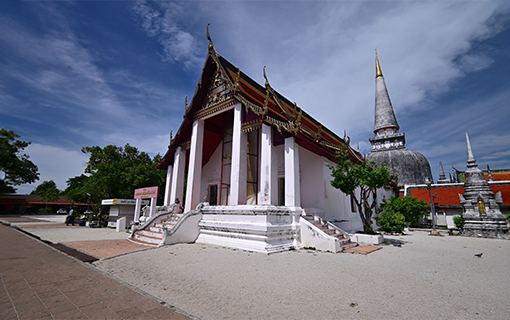
Thammasala Vihara at Wat Phra Mahathat Woramahawihan.
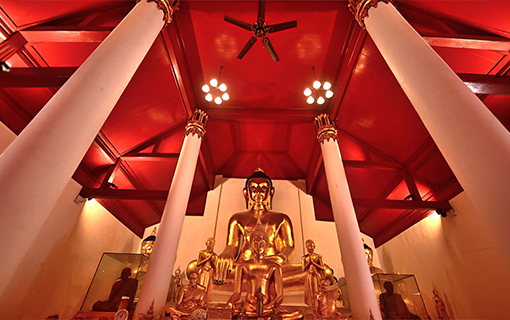
Phra Si Sakyamuni Si Thammarat, the principal Buddha image inside the Royal Vihara.
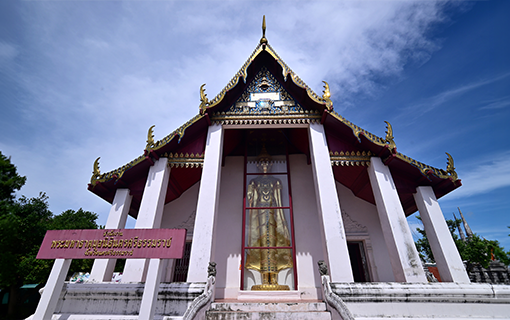
Phra Thantha Kumara, a standing Buddha image in the gesture of reassurance, enshrined in front of Thammasala Vihara.
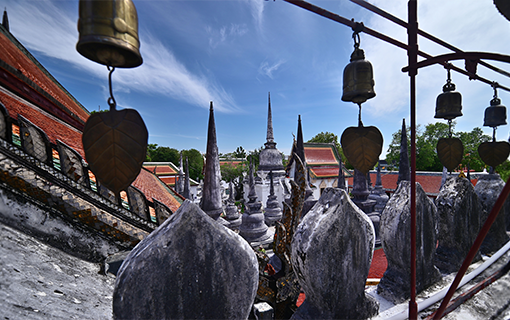
Sacred chedis and religious structures within the grounds of Wat Phra Mahathat Woramahawihan.
At the centre of the temple complex rises the magnificent Phra Borommathat Chedi, the Great Reliquary believed to enshrine sacred relics of the Buddha. Its graceful bell-shaped form and towering golden spire dominate the skyline, standing as both a spiritual beacon and an enduring symbol of Nakhon Si Thammarat.
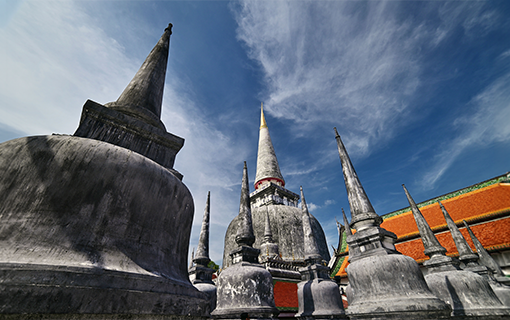
A collection of chedis surrounding the magnificent Phra Borommathat Chedi, the principal reliquary believed to enshrine sacred relics of the Buddha.
Beyond the main chedi, the temple reveals its stories layer by layer. Wander through the inner walls and discover rows of smaller stupas, historic viharnas, Buddha images lining the cloister, the towering Phra Attharot Buddha image and the revered image of Phra Sangkachai. Visitors may also encounter representations of Jatukham and Rammathep, the guardian deities traditionally associated with the protection of the Great Reliquary.
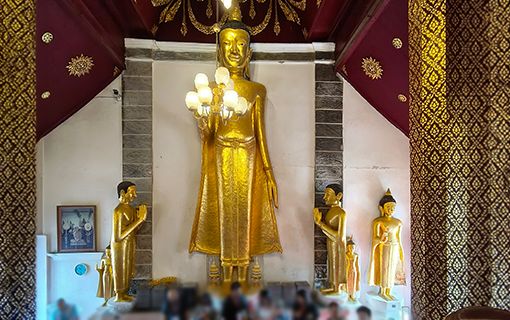
Phra Attharot, the towering standing Buddha image enshrined near the entrance to the circumambulatory terrace of Phra Borommathat Chedi.
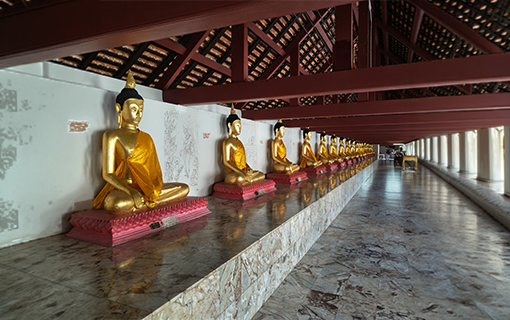
Buddha images enshrined along the temple’s cloister, traditionally known as the Glass Gallery.
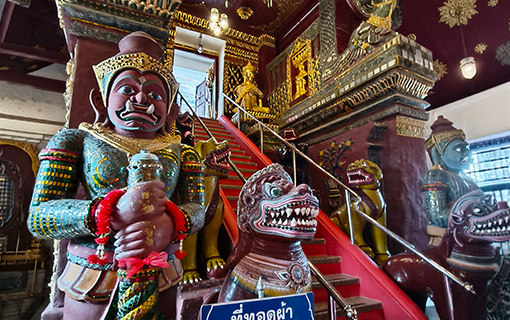
A glimpse of Vihara Phra Song Ma, the gateway leading towards Phra Borommathat Chedi. Above the entrance are sculptures of Jatukham and Rammathep, the guardian deities of the Great Reliquary.
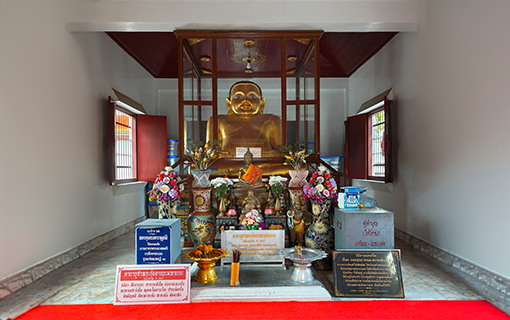
Phra Sangkachai, the revered image representing the Buddhist elder Mahakaccayana.
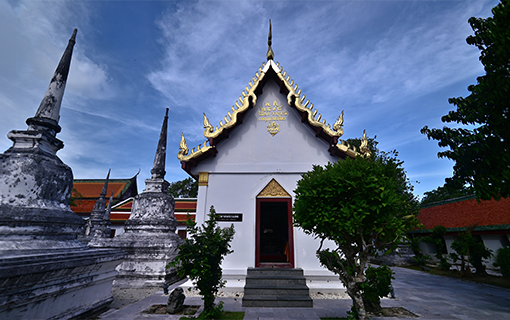
Vihara Phra Ad, a small vihara constructed during a later period and named after the locally revered image of Phra Sangkachai enshrined within.
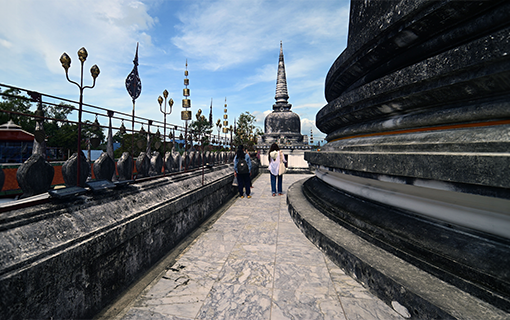
The sacred circumambulatory courtyard surrounding Phra Borommathat Chedi.
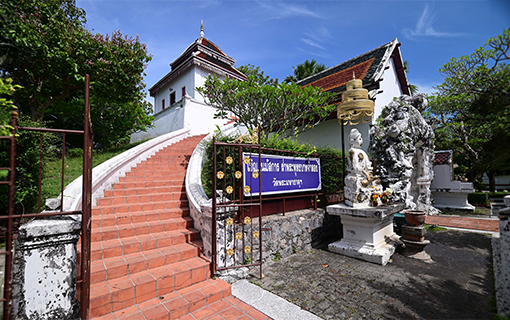
The vihara housing a replica of the Buddha’s Footprint.
Every corner offers another detail to admire—a sculpted figure, a weathered wall, a sacred image or an architectural element shaped by centuries of devotion.
UNESCO recognised the temple under two important criteria. Criterion (ii) reflects the remarkable exchange of religious, artistic and architectural influences across South and Southeast Asia, which evolved into a distinctive local tradition. Criterion (vi) recognises the temple’s profound connection with living beliefs, rituals and cultural traditions that continue to shape the identity of the region.
Among these traditions is Hae Pha Khuen That, the annual ceremony in which devotees carry a sacred cloth in procession before wrapping it around the Great Reliquary. The temple is also closely linked with the traditions of the Nakhon Si Thammarat chronicles and Nora, Southern Thailand’s celebrated dance-drama
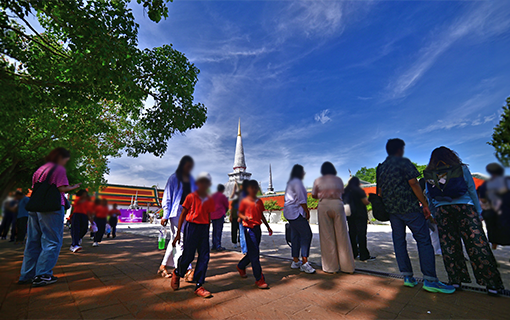
Buddhist devotees gathering in the temple’s outer courtyard.
This is what makes Wat Phra Mahathat Woramahawihan a truly living heritage site. It is not a monument frozen in the past, but a place where history, faith and everyday life remain deeply connected.
A visit to the temple can also become the starting point for exploring the wider cultural landscape of Nakhon Si Thammarat. Nearby heritage sites—including the Old City Wall, the City Pillar Shrine, Ho Phra Sung, Ho Phra Isuan and the Phra Suea Mueang Shrine—reveal further chapters of a city shaped by Buddhism, Brahmanism, ancient trade and local belief.
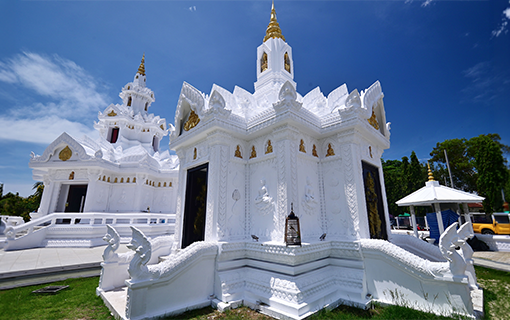
The Nakhon Si Thammarat City Pillar Shrine, one of the city’s most important sacred landmarks
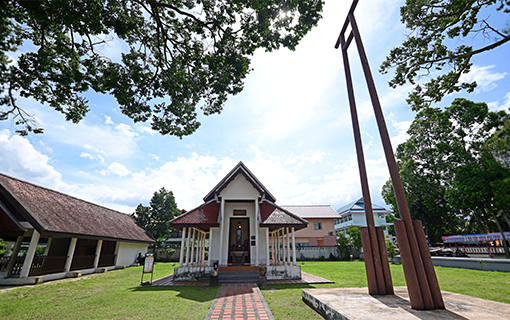
Ho Phra Isuan, a historic shrine dedicated to the Hindu deity Shiva, reflecting the city’s ancient Brahmanical heritage.
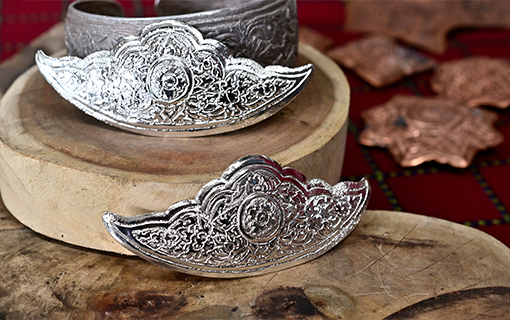
Traditional Nakhon Si Thammarat silverware, one of the province’s most celebrated forms of local craftsmanship.
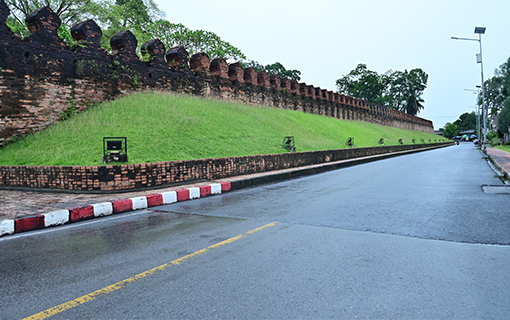
The remains of the Old City Wall, a reminder of Nakhon Si Thammarat’s long and significant history.
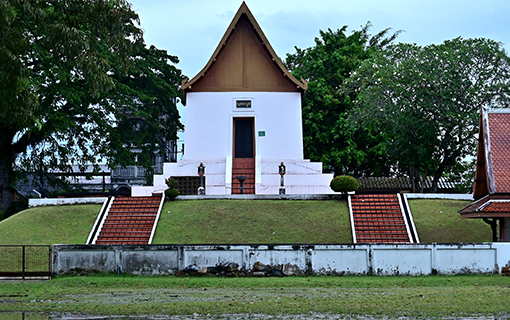
Ho Phra Sung, an elevated historic shrine and one of the important religious heritage sites surrounding Wat Phra Mahathat Woramahawihan.
For travellers fascinated by sacred architecture, Buddhist art and the enduring traditions of Southern Thailand, Wat Phra Mahathat Woramahawihan deserves a place on the journey.
Come not only to admire its beauty, but to walk through centuries of history, experience a heritage that remains alive and discover the spiritual heart of Nakhon Si Thammarat for yourself.
Let Pacific Leisure take you beyond the familiar and into the living heritage of Southern Thailand.
Editor in Chief : Nampetch Siramanon
Editor: Pacific Leisure (Thailand)
Content Creator : Mr. Saroj Na Ayutthaya
Navigate
Terms & Privacy
Pacific Leisure (Thailand) Limited
No. 888/154, Mahatun Plaza Bldg., 15th Floor,
Ploenchit Road, Lumpini, Pathum Wan,
Bangkok 10330, Thailand
Phone : +66 22 542 966
Mobile : +66 63 224 1384, +66 81 138 2983
Email : info@pacificleisureth.com
Website : https://www.PacificLeisureTH.com
(TAT) Licensed No: 11/00161