
Umphang: 1,219 Curves into Thailand’s Wild Side
There are places you simply visit.
And then there are places you have to earn your way into.
Umphang belongs firmly in the second category.
Hidden among mountains and vast forests in the far south of Tak Province, close to the Myanmar border, Umphang feels wonderfully removed from Thailand’s usual travel trail. This is a land of rainforest, rivers, waterfalls, morning mist and small communities tucked between mountains—a destination made for travellers who would happily trade shopping streets and rooftop bars for muddy trails, rafting boats and the sound of water rushing through the forest.
And before you even arrive, Umphang has already started testing your adventurous spirit.
The adventure begins with 1,219 curves
Getting to Umphang is part road trip, part endurance challenge.
From Tak, the district lies roughly 240 kilometres away, while the legendary stretch from Mae Sot follows Highway 1090 for around 164 kilometres through the mountains.
Then come the curves.
Not ten. Not a hundred.
1,219 of them.
The road climbs, drops and twists along mountain ridges for kilometre after kilometre. One moment you are looking into deep green valleys; the next, mist drifts across the road and everything disappears.
Rain. Sunshine. Fog. Clear blue sky.
Sometimes all in the same journey.
It is spectacular, but this is certainly not the road on which to discover whether you are secretly a talented mountain driver. If winding mountain roads are not your speciality, travelling with an experienced local driver is the far better choice.
Fortunately, the scenery gives you plenty of reasons to slow down.
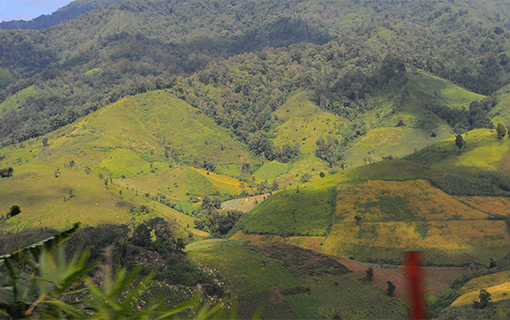
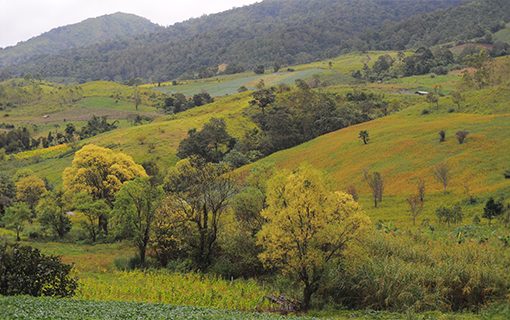
Scenic landscapes along the road before reaching Umphang District.
Dense forest opens unexpectedly onto grasslands and highland farms. Small rice fields cling to the mountainsides, while villages appear between valleys where streams, vegetable plots and flower fields become part of the landscape.
The journey is long, but that is precisely the point.
Umphang makes you slow down before it allows you in.
A town surrounded by the wild
Umphang itself is surprisingly small and peaceful, especially considering the enormous district surrounding it.
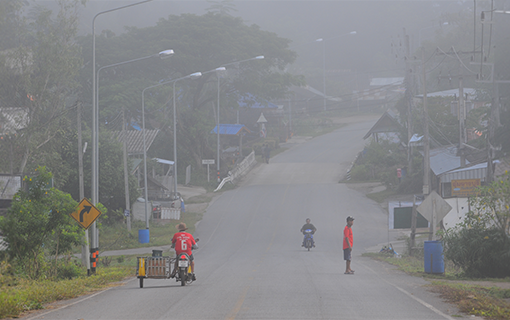
Morning mist blanketing Umphang town.
The area has long been home to Pga K’nyau, or Karen, communities whose lives are closely connected with the surrounding forests and upland landscapes. Today, people from different backgrounds live throughout the district, creating a quiet mountain town surrounded by some of western Thailand’s most impressive wilderness.
There are no endless rows of attractions competing for attention here.
Instead, there are mountains.
Rivers.
Forests.
Waterfalls.
And roads that seem to disappear into all of them.
This is why travelling in Umphang is less about ticking places off a list and more about moving through the landscape itself.
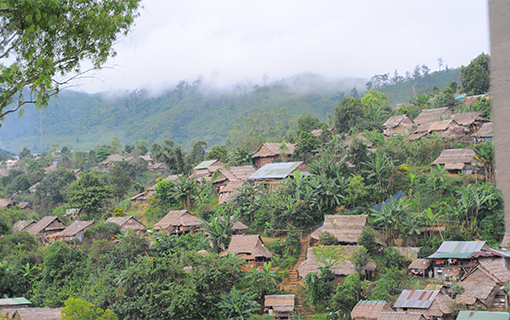
Umphiem Village, located outside the Umphang Wildlife Sanctuary, is a popular stop along the way, with restrooms and restaurants across from the village.
First mission: wake up before sunrise
Yes, holidays are usually supposed to involve sleeping late.
Umphang has other plans.
Before dawn, while the town is still hidden beneath darkness and mist, travellers begin making their way toward Doi Hua Mot.
Why voluntarily leave a warm bed at such an unreasonable hour?
Because when the light begins to appear, the answer reveals itself.
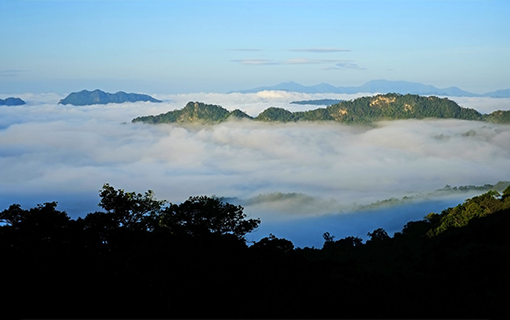
A sea of mist captured from Doi Hua Mot, one of Umphang’s most iconic viewpoints.
Layers of mountains emerge beneath a sea of white mist, sometimes flowing between the ridges like waves. Doi Hua Mot is one of Umphang’s classic sunrise viewpoints, and catching the first light here has almost become a ritual before heading deeper into the district.
The landscape changes again during the rainy season. In September and October, tiny pink-purple Impatiens mirabilis flowers can spread across parts of the grassy mountain slopes, adding another reason to visit during the green season.
Coffee afterwards feels very well deserved.
Then, let the river take over
Umphang is a world shaped by water.
Small streams run through forests and villages, while larger waterways cut their way between dramatic limestone cliffs. Unsurprisingly, some of the best adventures here happen from a raft rather than a car.
Rafting along the Mae Klong River is part transportation, part sightseeing and part reminder that nature does not need much help creating drama.
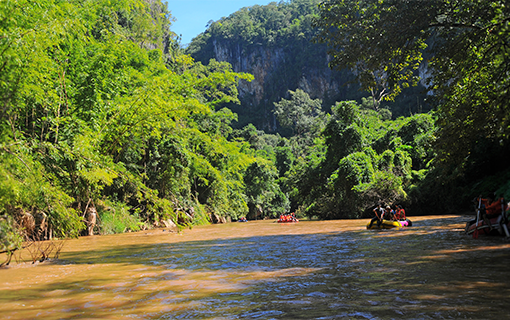
Rafting on the Mae Klong River, where some stretches open into a wide and scenic waterway.
Along the route, forest closes in from both sides while limestone cliffs rise above the water.
Then waterfalls begin appearing.
One of the most photogenic is Thi Lo Cho, often called the Rainbow Waterfall, where fine spray can catch the sunlight and create flashes of colour.
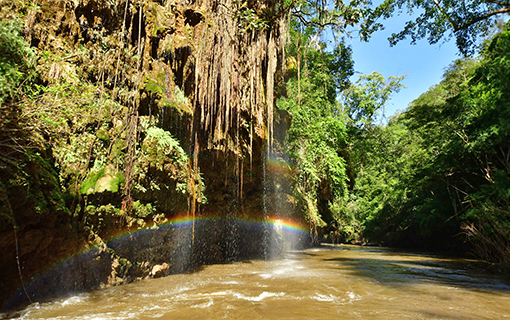
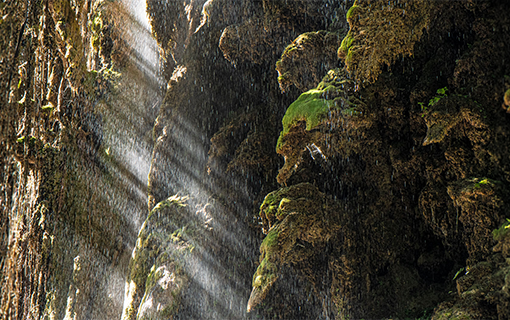
Thi Lo Cho Waterfall, also known as the Rainbow Waterfall, along the Mae Klong River.
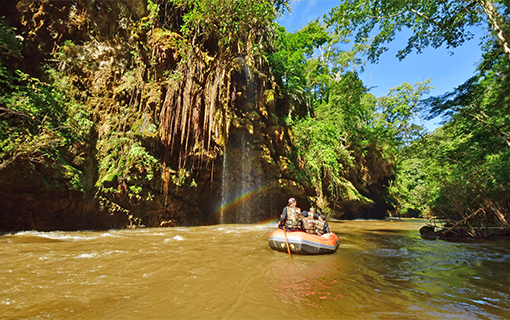
A rafting boat passing by Thi Lo Cho Waterfall
There is also Mu Tha Lu Waterfall, while distinctive limestone formations such as Pha Phueng and Pha Lueat add character to the journey.
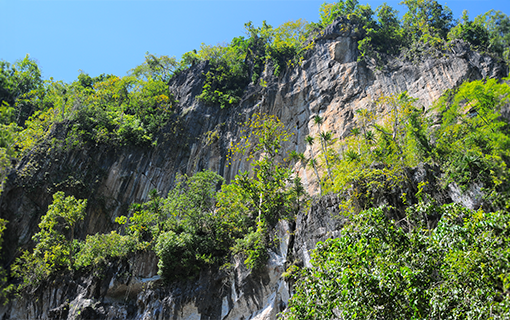
Pha Lueat, one of the striking limestone cliffs seen along the rafting route.
You do not rush through this landscape.
You float through it.
Listen to it.
And occasionally forget that your phone has a signal—or that you own one.
And then comes Thi Lo Su
Eventually, the journey reaches the reason many travellers dreamed of coming to Umphang in the first place:
Thi Lo Su Waterfall.
Located within Umphang Wildlife Sanctuary, Thi Lo Su is one of Thailand’s most celebrated waterfalls and the headline attraction of the region. The Tourism Authority of Thailand describes a classic journey combining rafting, an approximately 14-kilometre vehicle section and a final 1.5-kilometre walk through the forest.
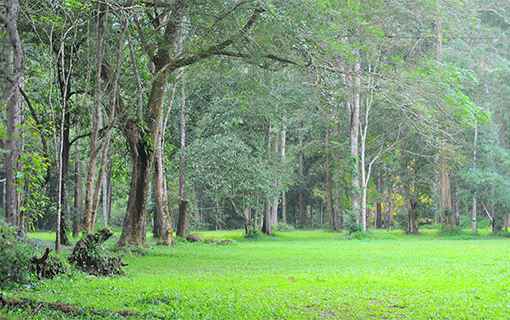
A grassy clearing in the lush forest — the Thi Lo Su camping ground.
That last walk is surprisingly friendly.
You do not need to be a hardcore mountaineer. The trail passes through humid evergreen forest filled with layers of vegetation, giving you time to notice the smaller details—ferns, vines, giant trees and the constant soundtrack of the forest.
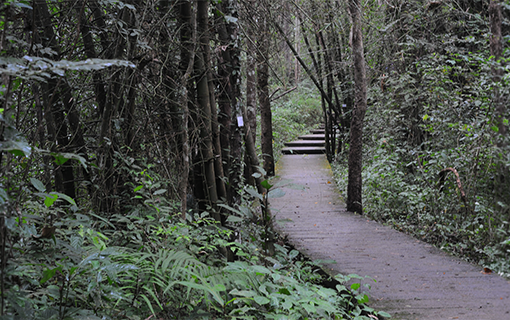
The walkway from the campsite to Thi Lo Su Waterfall is mostly a wooden boardwalk, making the trail easy and comfortable to walk.
Then you begin to hear it.
Water.
At first distant.
Then louder.
And louder.
Until the forest finally opens.
Thi Lo Su does not appear politely.
It fills the landscape.
Great curtains of white water tumble across a huge forest-covered cliff, breaking into multiple cascades before disappearing among rocks and vegetation below. Mist hangs in the air, greenery presses in from every direction and suddenly the long drive, the curves, the river and the forest trail all make perfect sense.
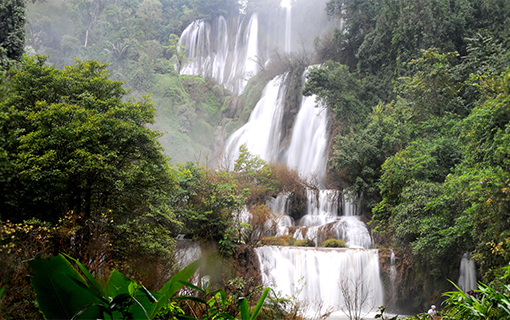
Thi Lo Su Waterfall, one of Thailand’s most spectacular natural wonders.
This is not a waterfall designed for a quick photograph and departure.
It is the kind of place that makes people stand still for a while.
Umphang isn't the easiest trip. That's why it stays with you.
If convenience is the priority, there are certainly easier destinations in Thailand.
Umphang asks for time.
It asks you to tolerate a winding mountain road, wake before sunrise, climb into a raft, change to a four-wheel-drive vehicle and finally continue on foot.
But in return, it gives you something increasingly difficult to find:
the feeling of travelling deep into a landscape rather than simply arriving at an attraction.
Forests become rivers.
Rivers lead to cliffs.
Cliffs hide waterfalls.
Small villages appear between mountains.
Mist rolls in and changes everything again.
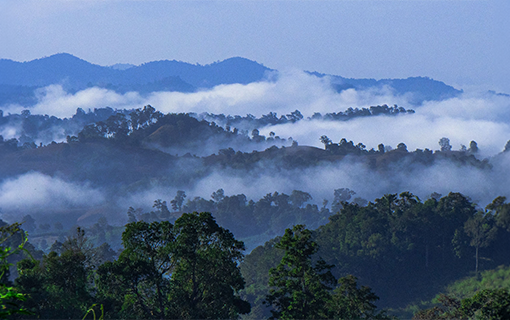
Mist drifting over the forests of Umphang.
For travellers who love the outdoors, this is Umphang’s real appeal.
Not only Thi Lo Su.
Not only Doi Hua Mot.
Not even those famous 1,219 curves.
It is the combination of forest, water, mountains, communities and the journey connecting them all.
And if travelling into the wild is your idea of a great holiday, Umphang deserves a place very near the top of your Thailand list.
Travel gently
Umphang’s beauty survives because much of the landscape remains protected and fragile. Travel with local operators and guides, respect community spaces, stay on designated trails, avoid disturbing wildlife and leave nothing behind.
Access to Thi Lo Su is also seasonal and can change with weather and road conditions. TAT information notes seasonal restrictions, and for the 2026 season, access reopened on 1 September 2026 following the rainy-season closure. Travellers should always check current sanctuary conditions before setting out.
Pacific Leisure invites you to discover another side of Thailand—where the road is part of the adventure, the forest sets the pace, and the reward is one of the country’s most unforgettable natural landscapes.
Editor in Chief : Nampetch Siramanon
Editor: Pacific Leisure (Thailand)
Content Creator : Mr. Saroj Na Ayutthaya
Navigate
Terms & Privacy
Pacific Leisure (Thailand) Limited
No. 888/154, Mahatun Plaza Bldg., 15th Floor,
Ploenchit Road, Lumpini, Pathum Wan,
Bangkok 10330, Thailand
Phone : +66 22 542 966
Mobile : +66 63 224 1384, +66 81 138 2983
Email : info@pacificleisureth.com
Website : https://www.PacificLeisureTH.com
(TAT) Licensed No: 11/00161