Sacred Bangkok: Seeking Blessings at Tai Hong Gong White Jade Shrine
Bangkok is a city where faith, culture, and everyday life are beautifully connected. Beyond its famous temples, riverside landmarks, lively markets, and modern shopping districts, the city is also home to sacred places that reflect the spiritual beliefs and cultural diversity of its communities.
For travellers who wish to discover Bangkok beyond the usual sightseeing route, spiritual tourism offers a more meaningful way to experience the city. It is a journey of faith, art, architecture, heritage, and quiet reflection, all woven into the local way of life.
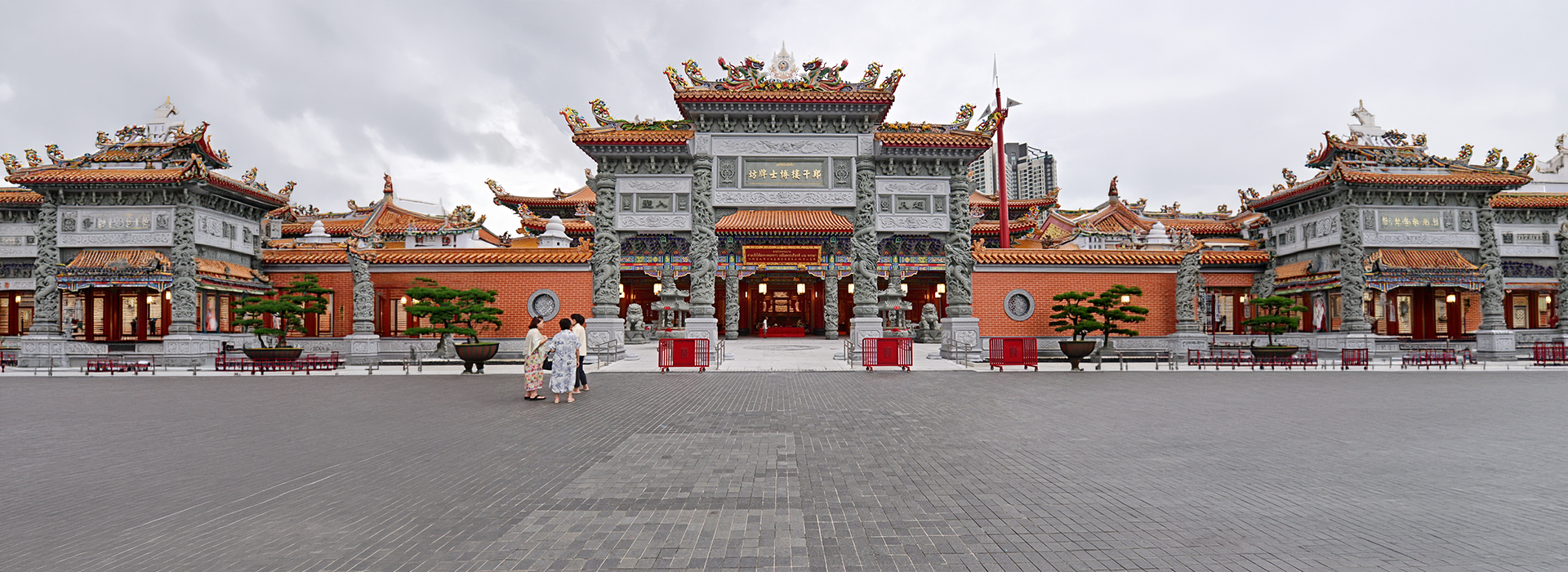
One of Bangkok’s newest and most remarkable spiritual landmarks is Tai Hong Gong White Jade Shrine, officially built in honour of His Majesty the King’s 72nd Birthday Anniversary. Located on Charoen Rat Road, near the Si Rat Expressway in Southern Sathorn, this grand Chinese shrine has quickly become a must-visit destination for worshippers, cultural travellers, architecture lovers, and those seeking blessings in the heart of Bangkok.
A New Spiritual Landmark in Southern Sathorn
Southern Sathorn may not always be the first name that comes to mind when people think of Bangkok’s travel routes. Yet this part of the city has its own quiet charm, with local communities, old neighbourhoods, religious sites, and urban life living side by side.
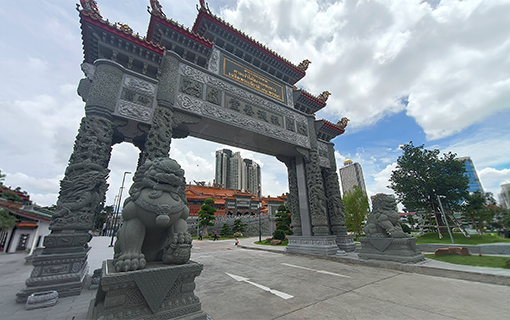
Tai Hong Gong White Jade Shrine in Honour of His Majesty the King’s 72nd Birthday Anniversary, seen from the roadside beneath the expressway — a striking new sacred landmark in Southern Sathorn.
The opening of Tai Hong Gong White Jade Shrine brings new attention to this area. Standing on more than four rai of land, the shrine impresses visitors from the very first moment.
The grand front gate, located on the left after entering through the outer fence, marks the first impressive architectural feature visitors encounter.
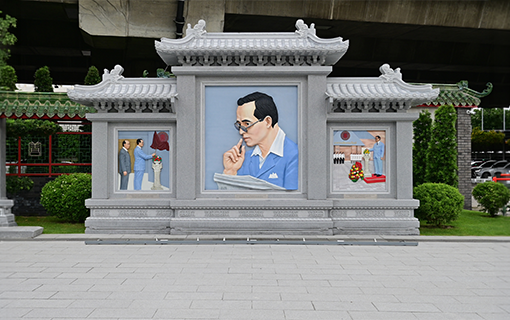
A beautifully carved stone wall depicting His Majesty King Bhumibol Adulyadej The Great, King Rama IX, reflecting deep respect and remembrance.
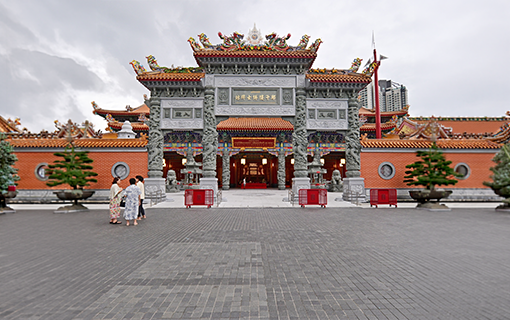
The front courtyard before reaching the shrine entrance, designed as a welcoming transition into the sacred area.
Its grand Chinese-style architecture, elegant rooflines, spacious halls, and striking white sculptures create a majestic atmosphere, almost like a Chinese palace in the middle of Bangkok.
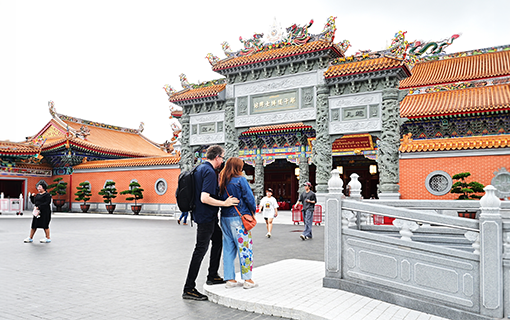
The spacious courtyard in front of the shrine’s main entrance gate, welcoming visitors into a peaceful sacred space.
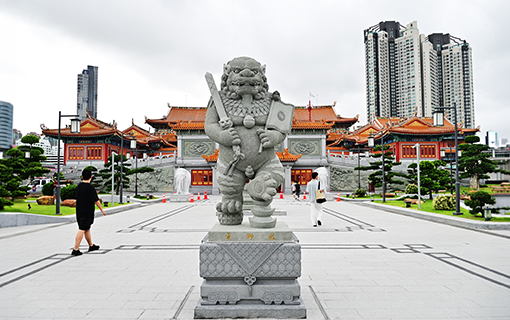
Sculptural details within the King Rama IX Commemorative Garden, adding a graceful cultural touch to the shrine’s front area.
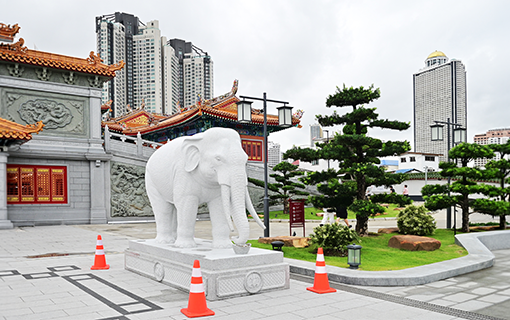
The King Rama IX Commemorative Garden features several elephant sculptures — a unique detail not commonly seen in traditional Chinese shrines, giving this place a special Thai cultural connection.
Seen from the nearby road or expressway, the shrine immediately stands out with its graceful presence. But beyond its beauty, this is a place filled with meaning, a space where faith, compassion, art, and community spirit come together.
The Story of Tai Hong Gong: A Legacy of Compassion
The shrine is dedicated to Tai Hong Gong, also known as Tai Hong Jo Sue, a compassionate monk from the Song Dynasty. Before entering monkhood, Tai Hong Gong once served as a government official. Later, he chose to leave worldly life behind and devoted himself to helping people in need.
His life became a symbol of kindness, charity, and selfless service. This spirit of compassion has inspired many generations and continues to live on through charitable organisations and communities, including Thailand’s Poh Teck Tung Foundation.
For worshippers, paying respect to Tai Hong Gong is often connected with blessings for protection, kindness, healing, support, and peace of mind. For cultural travellers, his story offers a meaningful reminder that spiritual heritage is not only about sacred rituals, but also about compassion and service to others.
A Place for Blessings, Faith, and Reflection
At the heart of the main shrine hall is the beautiful white jade statue of Tai Hong Gong. The pure white colour creates a peaceful and serene atmosphere, reflecting the compassion and kindness associated with Tai Hong Gong himself.
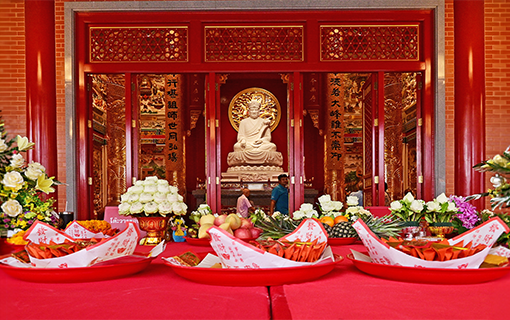
Worship tables placed at the ceremonial courtyard before entering the main shrine hall.
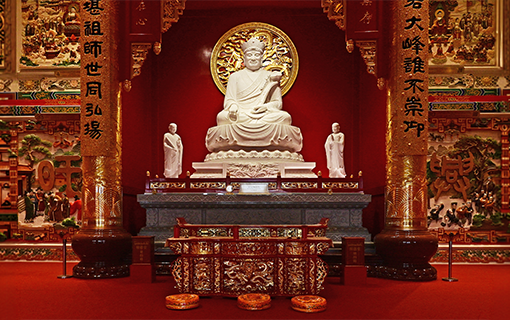
The elegant white jade statue of Tai Hong Gong, the compassionate monk whose legacy of kindness and selfless service continues to inspire worshippers.
The shrine also houses several important Buddhist and Chinese deities.
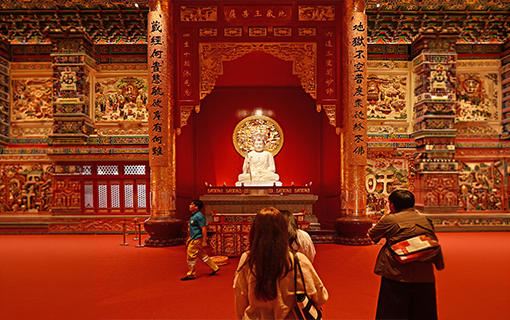
The statue of Ksitigarbha Bodhisattva, known in Chinese tradition as Ti Zhang Wang Pu Sa, represents compassion and the vow to guide beings with mercy.
On one side, visitors will find Ksitigarbha Bodhisattva, while on the other side stands Avalokitesvara Bodhisattva, widely known as Guan Yin, the Bodhisattva of compassion.
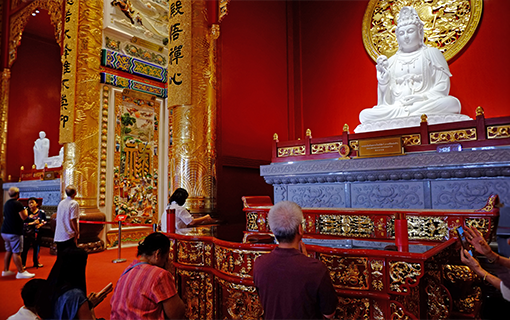
The serene statue of Avalokitesvara Bodhisattva, or Guan Yin, the Bodhisattva of compassion and mercy.
Other revered deities within the shrine include Guan Yu, Mazu the Heavenly Mother, the God of Fortune, the God of Education, the Earth God, the Year God, the City Guardian deity, and other guardian figures.
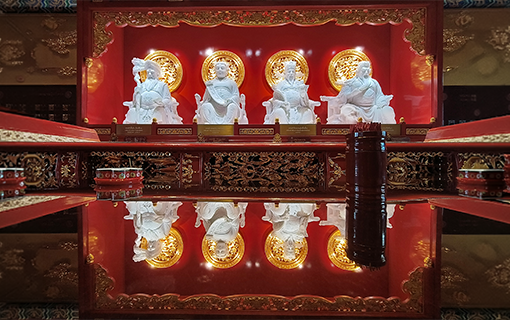
The statues of revered Chinese deities: the Earth God, the Year God, the God of Fortune, and Guan Yu, each associated with protection, prosperity, guidance, and loyalty.
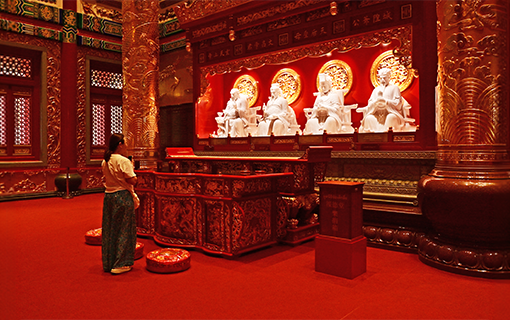
The statues of Xuan Tian Shang Di, the God of Education, Mazu the Heavenly Mother, and the City Guardian Deity represent protection, wisdom, safe journeys, and spiritual guardianship.
Each deity represents different aspects of belief, including protection, wisdom, fortune, education, guidance, and compassion.
For spiritual travellers, this makes Tai Hong Gong White Jade Shrine a meaningful destination for making wishes, seeking blessings, paying respect, or simply spending a peaceful moment in a sacred environment.
Chinese Art and Architecture in the Heart of Bangkok
Tai Hong Gong White Jade Shrine is not only a religious site; it is also a remarkable destination for those who appreciate Chinese architecture and craftsmanship.
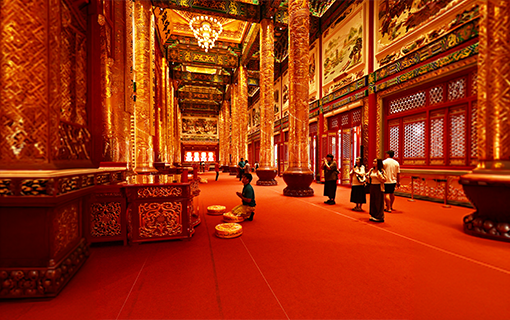
Inside the shrine, the grand main hall features a remarkably high ceiling, creating an atmosphere of openness, dignity, and sacred calm.
Throughout the shrine, visitors can admire beautiful white sculptures, colourful wall reliefs, carved stone details, ceremonial halls, a commemorative garden, and elegant architectural elements inspired by Chinese spiritual traditions.
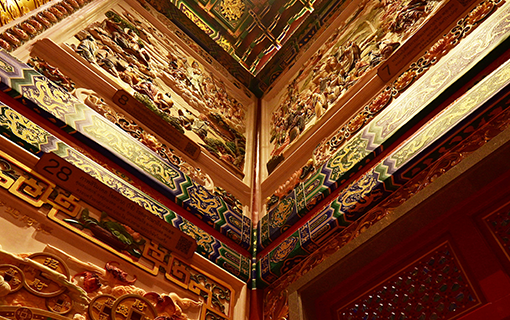
Semi-relief sculptures inside the shrine hall, adding colour, depth, and cultural meaning to the sacred interior.
The white statues are especially memorable. Their clean and graceful appearance gives the shrine a calm and sacred feeling, while the detailed carvings reflect the devotion and skill behind the creation of this place.
Inside the shrine, the colourful wall reliefs tell stories through art and symbolism.
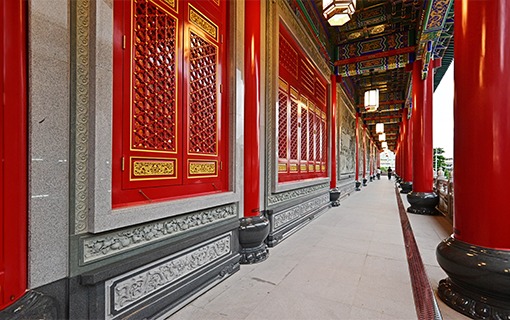
The rear corridor of the shrine offers a quiet walking path, where visitors can admire stone sculptures and symbolic stories along the way.
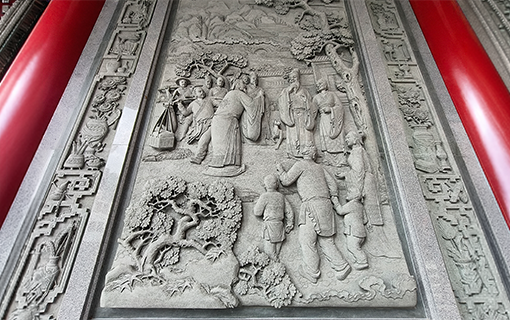
Semi-relief stone sculptures along the rear corridor wall, showcasing the craftsmanship and narrative beauty of Chinese spiritual art.
Along the corridors, the sculptural details feel dignified and powerful. Together, these artistic elements turn the shrine into a living gallery of Chinese faith, culture, and heritage.
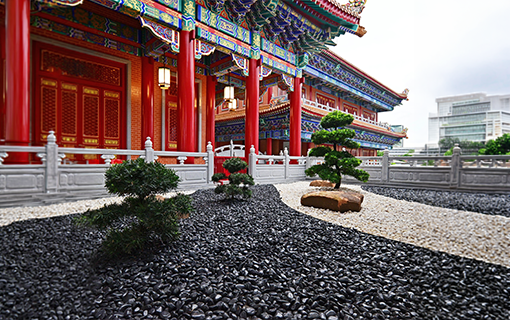
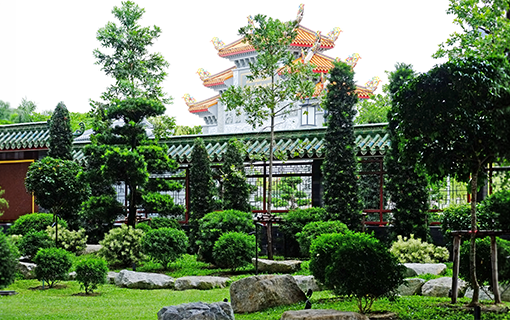
A peaceful rock garden viewed from the worship courtyard, with the Jittin Tantuvanit Multi-Purpose Building located at the far right.
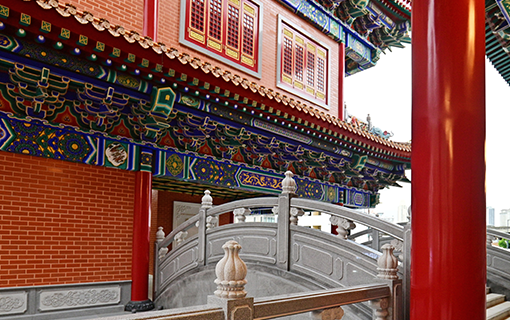
A connecting bridge linking the main shrine to the Jittin Tantuvanit Multi-Purpose Building, blending function with graceful architectural design.
A Meaningful Stop for Bangkok Spiritual Tourism
For visitors who are interested in “sai mu” travel, or spiritual tourism, Tai Hong Gong White Jade Shrine is a destination that should not be missed.
It offers a different side of Bangkok, one that is peaceful, graceful, and deeply rooted in faith. Whether you come to pray for blessings, admire the architecture, take photographs, learn about Chinese spiritual traditions, or explore a new cultural landmark, the shrine offers an experience that is both beautiful and meaningful.
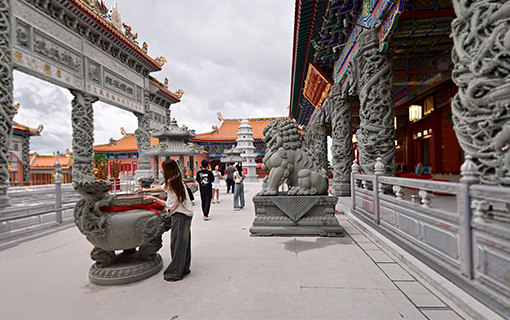
The main worship courtyard, a peaceful open space where visitors gather to pay respect and seek blessings.
This destination can also be included as part of a Bangkok cultural route, especially for travellers who wish to explore sacred sites, local communities, Chinese heritage, and hidden gems beyond the city’s main tourist areas.
Travel with Respect
At Pacific Leisure, we believe that meaningful travel begins with respect. Sacred places like Tai Hong Gong White Jade Shrine are not simply attractions; they are living places of faith for local communities and worshippers.
Visitors are encouraged to dress modestly, speak softly, follow the shrine’s guidelines, and be mindful when taking photographs. Taking time to observe, understand, and appreciate the sacred atmosphere allows travellers to connect more deeply with the place they visit.
This is the heart of responsible religious tourism: to discover with curiosity, to admire with respect, and to leave with a deeper understanding of local culture and belief.
Best Time to Visit
Tai Hong Gong White Jade Shrine is open daily from morning until evening. For visitors who enjoy photography, late afternoon is a beautiful time to visit, when the light becomes softer and the atmosphere feels more peaceful.
On Fridays, the shrine opens later than usual, allowing visitors to experience the site in the evening when the lights are turned on. The illuminated shrine, together with the surrounding garden, creates a serene and almost magical atmosphere, perfect for those who wish to see the shrine from a different perspective.
Discover Bangkok with Deeper Meaning
Bangkok is more than a city of temples, markets, food, shopping, and nightlife. It is also a city of faith, blessings, heritage, and stories. Places like Tai Hong Gong White Jade Shrine remind us that spiritual culture continues to grow and evolve, even in the middle of a modern city.
For travellers seeking a meaningful Bangkok experience, this new sacred landmark in Southern Sathorn is truly worth a visit.
Pacific Leisure invites you to explore Bangkok through faith, culture, art, and responsible travel, and to discover the city with a deeper heart.
Editor in Chief : Nampetch Siramanon
Editor: Pacific Leisure (Thailand)
Content Creator : Mr. Saroj Na Ayutthaya
Navigate
Terms & Privacy
Pacific Leisure (Thailand) Limited
No. 888/154, Mahatun Plaza Bldg., 15th Floor,
Ploenchit Road, Lumpini, Pathum Wan,
Bangkok 10330, Thailand
Phone : +66 22 542 966
Mobile : +66 63 224 1384, +66 81 138 2983
Email : info@pacificleisureth.com
Website : https://www.PacificLeisureTH.com
(TAT) Licensed No: 11/00161