
Phu Kradueng : A Journey at the Edge of Change There are some journeys we remember not only for where they take us, but for the way we get there. Phu Kradueng is one of them.
Ask almost any Thai nature lover about Phu Kradueng, and chances are they will have a story to tell — their first climb, the steep trail that seemed to go on forever, a welcome rest at a small refreshment stop, the first cool breeze on the plateau, or that unforgettable moment when the pine forest finally appeared after hours of walking.
For generations of travellers, reaching the top has always been part of the experience.
Located in Loei Province in northeastern Thailand, Phu Kradueng National Park rises dramatically above the surrounding landscape. Its broad plateau is home to remarkably diverse ecosystems, from evergreen forest and open woodland to extensive pine forest, waterfalls, cliffs and seasonal wildflowers.
This is not a mountain with just one viewpoint to photograph and leave.
It is a landscape meant to be explored slowly.
A Mountain Full of Life
Once on the plateau, Phu Kradueng reveals another side of itself.
Trails lead through forests to waterfalls such as Wang Kwang Waterfall, Phen Phop Mai Waterfall and Tham Yai Waterfall, while long stretches beneath tall pine trees invite travellers to simply walk, breathe and enjoy the changing landscape.
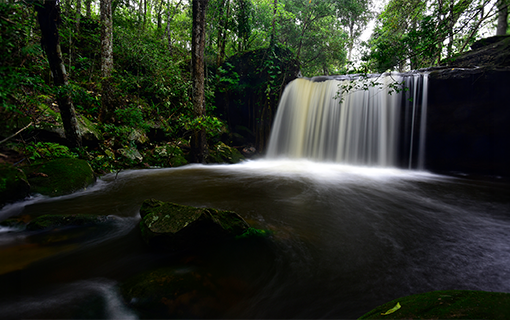
Wang Kwang Waterfall : Wang Kwang Waterfall, surrounded by lush forest and especially refreshing at the beginning of the tourism season when the rainy season has only just passed.
Wildlife remains an important part of the mountain ecosystem, including a population of wild elephants. For this reason, respecting park regulations and following the instructions of rangers is essential — not only for visitor safety, but also for protecting the animals whose home we are entering
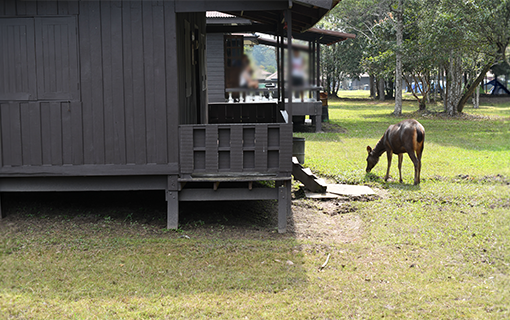
A Wild Deer Visitor : Wild deer are familiar residents around the visitor and accommodation areas, and they often make a quiet appearance near travellers. Remember — this is their home, and wildlife should always be observed from a respectful distance.
Then there are the skies.
Wake before dawn and walk towards Pha Nok Aen, where mist often drifts across the valleys as the first light appears.
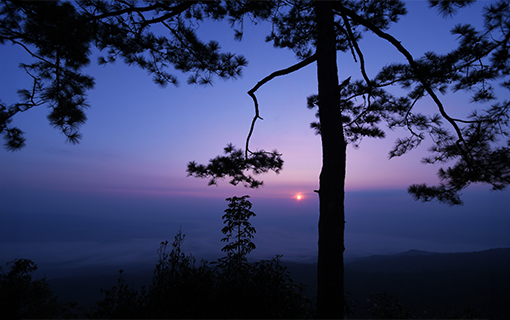
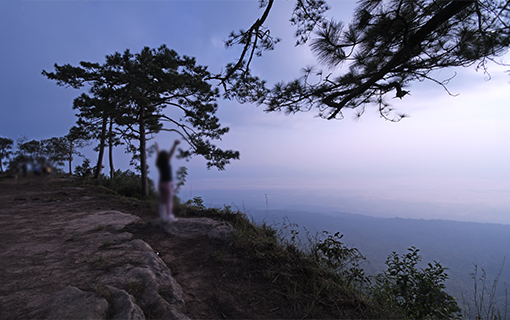
Pha Nok Aen : Pha Nok Aen at sunrise, where early-morning mist drifts across the valley and rewards travellers who wake before dawn.
Spend the afternoon travelling across the plateau and continue towards Pha Lom Sak, one of Phu Kradueng's most iconic sunset viewpoints, approximately nine kilometres from the main visitor centre.
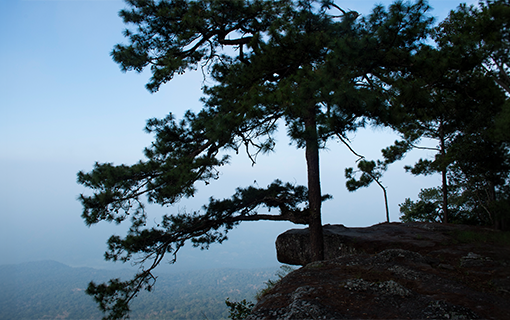
Pha Lom Sak : The iconic Pha Lom Sak, one of Phu Kradueng’s most memorable viewpoints and a favourite place to watch the sun slowly disappear beyond the mountains.
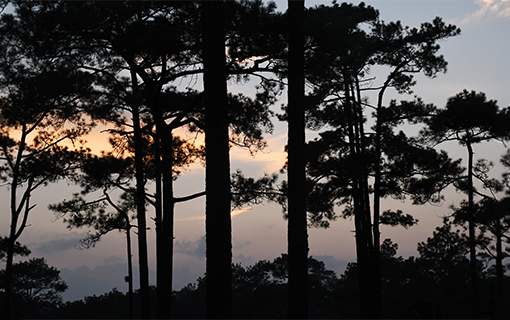
Pha Mak Duk : Pha Mak Duk, another beautiful cliffside viewpoint offering wide-open views across the surrounding landscape of Phu Kradueng.
And after darkness falls, return to camp beneath a sky that, on a clear night, can feel impossibly wide.
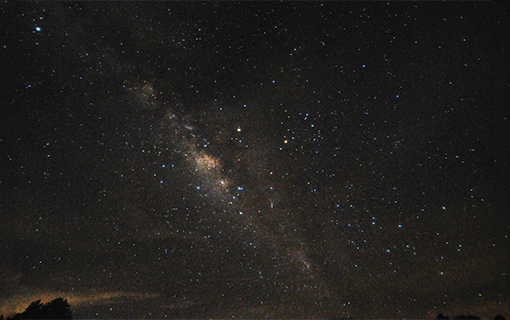
The Milky Way Above Phu Kradueng : On a clear night, the Milky Way stretches above the camping ground — a quiet reminder that some of Phu Kradueng’s most beautiful moments begin after the sun has set.
Sunrise, forest, waterfalls, sunset and stars — all within one mountain journey.
The Climb Is Part of the Story
The traditional journey to Phu Kradueng is demanding, but that is precisely what makes it memorable.
From the park entrance, trekkers climb roughly five kilometres up the mountain before reaching Lang Pae, the edge of the upper plateau. From there, another approximately three kilometres of gentler walking leads towards the visitor and camping area.
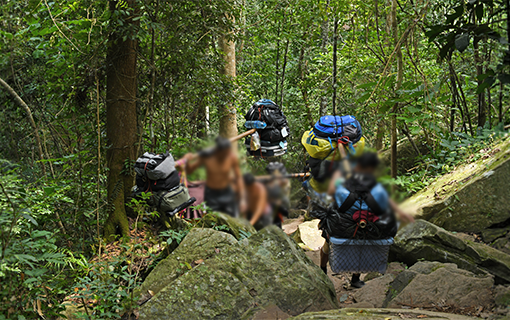
The Porters of Phu Kradueng : Local porters have long been part of the Phu Kradueng journey, carrying travellers’ luggage up and down the mountain. As accessibility to the mountain changes in the future, this familiar sight may gradually become less common.
The first section can be steep and tiring.
But Phu Kradueng has its own rhythm.
You climb for a while. You stop. You drink something cold. You talk to another traveller. Then you continue.
Small rest stops along the climbing route have long been part of the Phu Kradueng experience, turning what could simply be an exhausting hike into a journey made up of many small moments.
There is no need to race the mountain.
Sometimes the best way to reach the top is slowly.
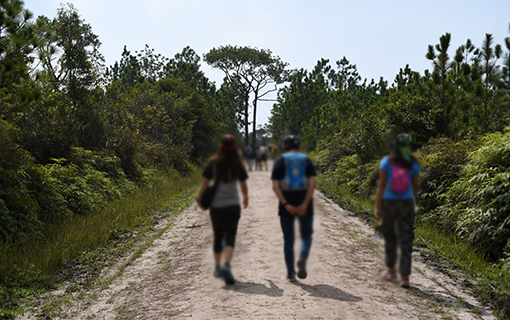
From Lang Pae to the Campsite : The second stage of the journey begins at Lang Pae, with an approximately three-kilometre walk across the plateau through pine forest towards the main camping area.
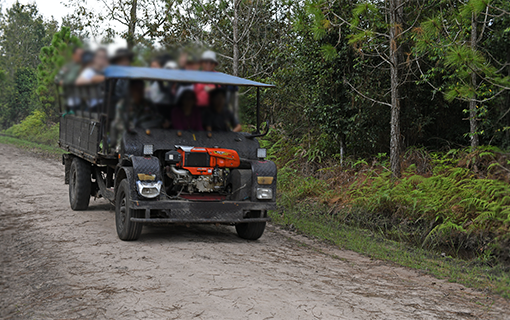
A Lucky Ride Across the Plateau : If luck is on your side, you may come across one of the forest rangers’ vehicles along the trail from Lang Pae. Sometimes travellers may be offered a ride — a welcome break after the long climb.
Why October Feels Special
Phu Kradueng National Park closes the upper mountain to tourism every year from 1 June to 30 September, allowing the forest and wildlife a period of recovery. The official tourism season runs from 1 October to 31 May.
That makes the beginning of October particularly interesting.
The rainy season has only just begun to retreat. Forests remain intensely green, streams and waterfalls carry abundant water, and moisture in the landscape can bring beautiful layers of mist around the cliffs and pine forests.
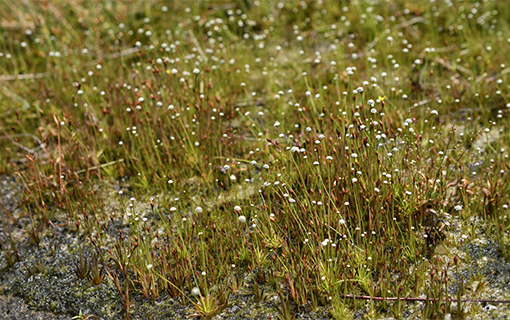
Silver Button Flowers : Delicate silver button flowers can often be spotted across the sandy grasslands of Phu Kradueng, adding tiny splashes of beauty along the trail.
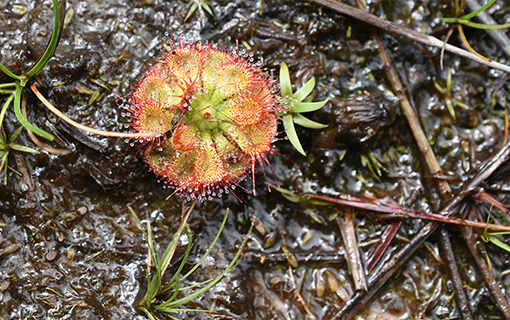
Drosera – Phu Kradueng’s Insect-Eating Flower : A fascinating insect-eating plant found on Phu Kradueng, usually seen from the end of the rainy season into the beginning of winter.
For travellers who enjoy seeing nature at its fullest rather than simply searching for cool winter temperatures, the early part of the season offers a completely different personality.
November brings cooler conditions, while later months gradually transform the colours, atmosphere and vegetation of the plateau.
Every visit tells a slightly different story.
Life on the Plateau
Today, exploring Phu Kradueng does not necessarily mean carrying everything on your back and disappearing into the wilderness.
There are camping areas, park accommodation and food shops within the designated visitor zone, making the experience accessible even to travellers who are relatively new to multi-day nature trips.
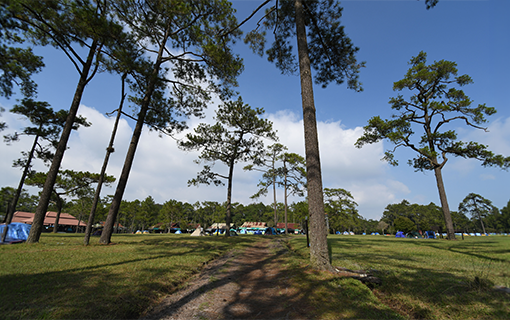
Phu Kradueng Campsite : The camping ground on the plateau, where travellers spend the night surrounded by pine forest, cool mountain air and an open sky.
Once on top, however, walking remains a major part of the adventure.
Distances between waterfalls, pine forests and cliff viewpoints can range from short excursions to considerably longer journeys. Bicycles are also available for rent, offering another enjoyable way to travel along some of the sandy tracks across the plateau.
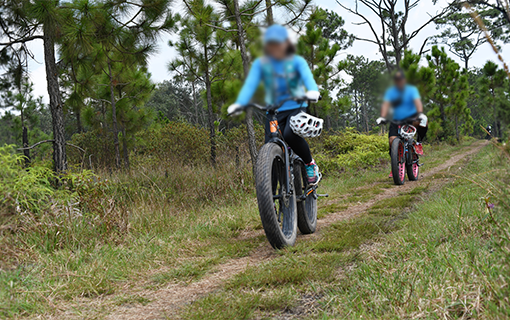
Cycling on Phu Kradueng : Cycling is another way to explore the plateau, following sandy trails through pine forest towards waterfalls and scenic viewpoints.
But whichever way you choose to explore it, Phu Kradueng rewards travellers who give it time.
This is not a destination to rush through.
A Mountain Between Two Eras
And perhaps that is why this particular period in Phu Kradueng's history feels so significant.
For decades, climbing the mountain on foot has been inseparable from its identity. The effort, the pauses, the conversations along the trail and the feeling of finally emerging onto the plateau have become part of the collective memory surrounding the mountain.
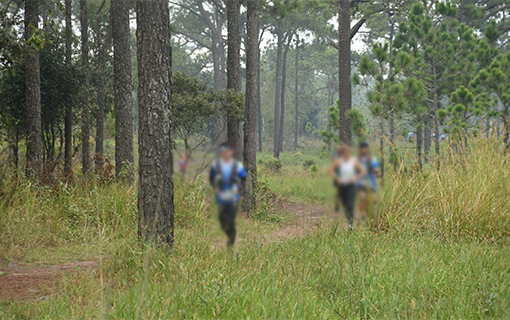
Trail Runners on Opening Day : Outdoor enthusiasts and trail runners gather at Phu Kradueng around the opening of the annual tourism season, turning the first days back on the mountain into a celebration of movement and nature.
Thailand has also been studying a proposed cable car system for Phu Kradueng, intended to improve accessibility while balancing tourism, community benefits and environmental protection. Earlier government plans targeted late 2026 as the beginning of a possible construction phase, although official information in June 2026 stated that the project was still under study and consideration.
The debate surrounding the project is understandable.
Greater accessibility could allow elderly travellers, people with disabilities and those physically unable to make the traditional climb to experience a landscape that has long been beyond their reach. At the same time, many hikers feel deeply attached to a journey defined by walking.
Perhaps the most important question is not simply whether reaching Phu Kradueng becomes easier.
It is how the mountain can remain Phu Kradueng.
How can visitors continue to experience its forests quietly? How can wildlife remain protected? How can local communities benefit? And how can increasing access coexist with the carrying capacity of a fragile mountain ecosystem?
These are questions that will shape the next chapter of this extraordinary place.
Go While the Journey Is Still Part of the Destination
For travellers who have climbed Phu Kradueng before, returning now may feel like revisiting an old friend at an important moment.
For those who have always said, “One day, I will climb Phu Kradueng,” perhaps this is the season to finally make that promise real.
Walk beneath the forest canopy.
Stop when you are tired.
Reach Lang Pae under your own power.
Cycle through the pine forest.
Wake early for the mist at Pha Nok Aen.
Walk towards Pha Lom Sak as afternoon turns golden.
And when night arrives, sit quietly beneath the stars.
Because sometimes travel is not only about seeing a beautiful place.
It is about experiencing a place in a particular moment in its history — before time moves forward and the journey begins to change.
Pacific Leisure invites you to discover Phu Kradueng slowly, responsibly and with respect for the landscape that has made this mountain one of Thailand's most meaningful nature journeys.
Travel deeper. Tread lightly. And let the journey become part of the memory.
Editor in Chief : Nampetch Siramanon
Editor: Pacific Leisure (Thailand)
Content Creator : Mr. Saroj Na Ayutthaya
Navigate
Terms & Privacy
Pacific Leisure (Thailand) Limited
No. 888/154, Mahatun Plaza Bldg., 15th Floor,
Ploenchit Road, Lumpini, Pathum Wan,
Bangkok 10330, Thailand
Phone : +66 22 542 966
Mobile : +66 63 224 1384, +66 81 138 2983
Email : info@pacificleisureth.com
Website : https://www.PacificLeisureTH.com
(TAT) Licensed No: 11/00161