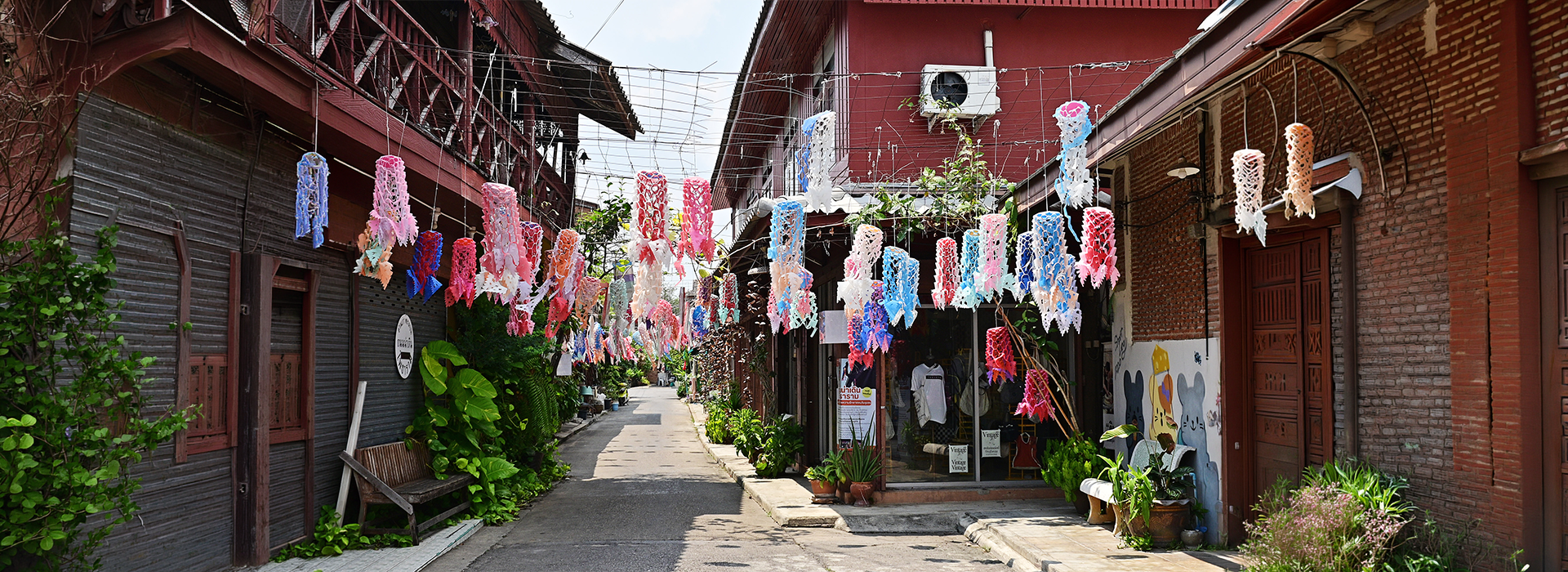
Photharam: Where Wooden Houses Whisper Stories from the Reign of King Rama V
A Slow Journey into a Riverside Town That Time Didn’t Erase
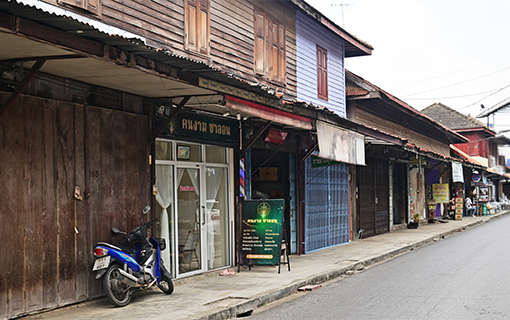
Photharam Road (the “walkable street”) lined with one- and two-story wooden houses
Just 100 kilometers from Bangkok, Photharam is not simply a small district in Ratchaburi.
It is a town shaped by trade, migration, and time, where architecture quietly records history.
Many of the wooden buildings you see today date back to the late Ayutthaya to early Rattanakosin period, with significant development during the reign of King Rama V (King Chulalongkorn, 1868–1910), a time when river trade and railway expansion transformed towns like Photharam into active commercial hubs.
Today, these structures are over 100–150 years old,
still standing, not as museums, but as part of everyday life.
Arriving by Train: Following the Same Route as the Past
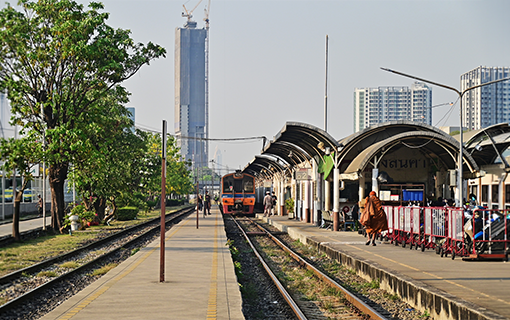
Bang Sue Grand Station, Bangkok – the starting point of the journey
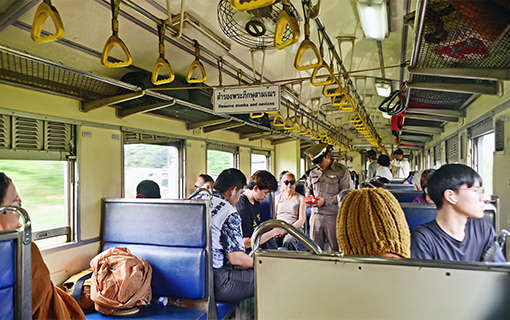
Inside the ordinary train No. 261 – simple, slow, and full of character
The railway line that brings you here is not just transportation; it is part of the town’s history.
During King Rama V’s reign, the expansion of Thailand’s railway network connected regional towns like Photharam to Bangkok, accelerating trade and cultural exchange.
Taking the train today from Bang Sue to Photharam is, in many ways,
retracing the same movement that once shaped this town.
And when you step off the platform, you immediately feel it; this is not a reconstructed heritage town. This is a place that has simply continued.
Urban Memory: A Town Once Divided, Now Blended
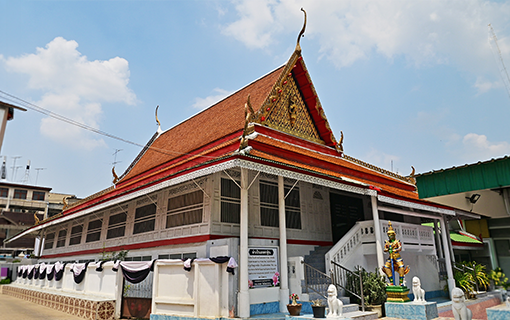
The historic wooden pavilion at Wat Photharam
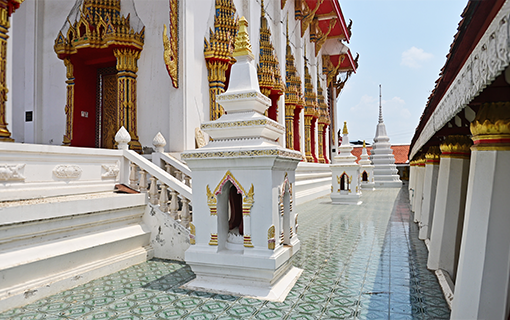
The boundary stone structures surrounding the ordination hall at Wat Photharam
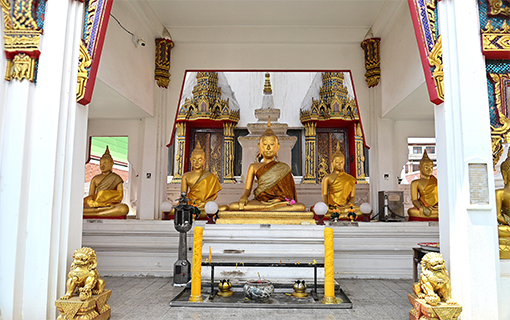
A Buddha statue enshrined in front of the temple’s ordination hall
Photharam was historically divided into “Upper Market” and “Lower Market”,
a reflection of its role as a trading settlement along the Mae Klong River.
That distinction has faded—but not disappeared.
You can still read it in the urban fabric:
- Rows of wooden shophouses with Chinese-European influences
- Community temples like Wat Photharam, with its rare double sema boundary stones
- Shrines such as Sun Tian Tua, representing the Chinese diaspora that once powered local trade
This is not curated heritage.
This is living continuity.
Kratom Photharam: Preservation Through Adaptation
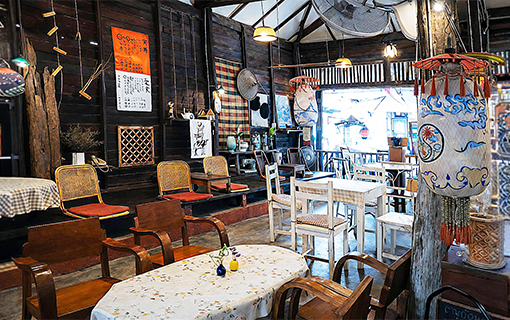
The restaurant area on the ground floor of Kratom Photharam
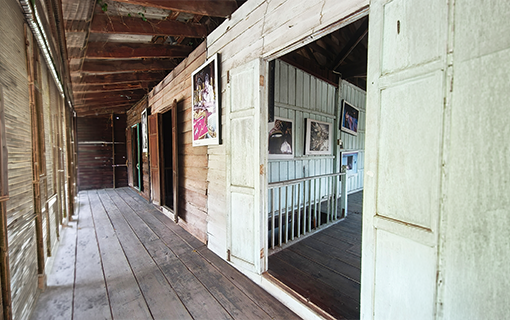
The photography gallery on the second floor of Kratom Photharam, featuring three exhibition rooms
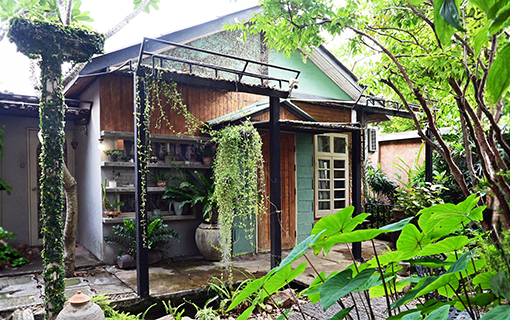
charming standalone wooden cottage — one of the accommodations at Kratom Photharam
(If time allows, staying overnight here is highly recommended)
At the center of this journey lies “Kratom Photharam,” a project that represents a quiet but powerful idea:
Preservation does not always mean freezing the past.
Sometimes, it means allowing it to evolve.
Originally part of the old wooden commercial district, this structure has been carefully adapted into:
- A café and local dining space
- A photography gallery documenting Photharam’s identity
- A cluster of 13 small wooden cottages for travelers
What makes it significant is not just design, but intention.
Instead of replacing old structures with new developments, the space demonstrates how heritage can remain economically and socially relevant.
Beyond Aesthetics: Cultural Layers Along the Walk
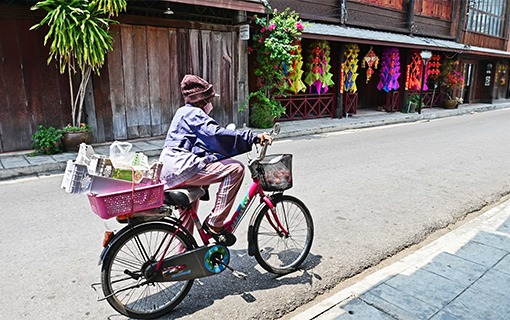
Bicycles remain a popular mode of transport among locals in Photharam
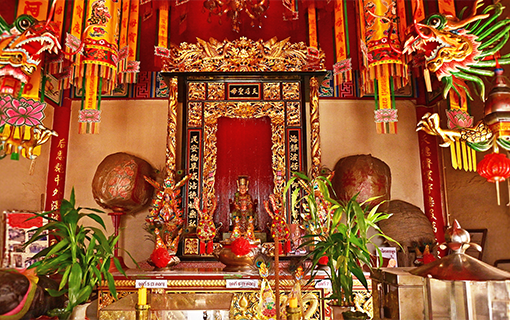
The statue of Goddess Tian Hou
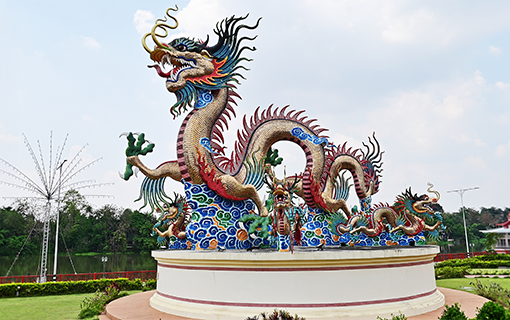
Golden dragon sculptures along the Mae Klong riverside
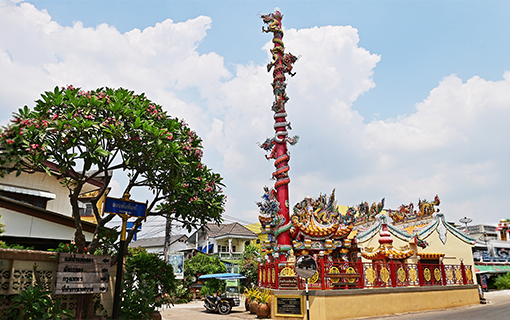
Tian Hou Shrine
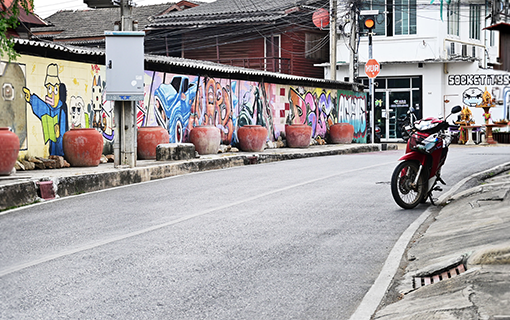
Street art along Panphim Road
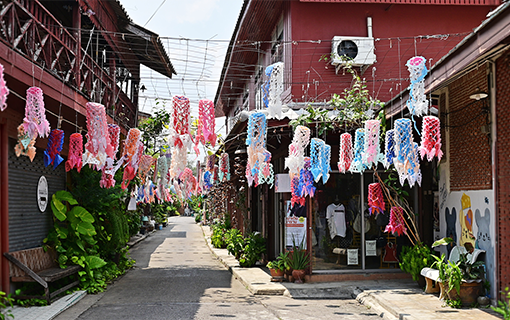
One of the most distinctive elements in town: “Phuang Mahot” — traditional Thai decorative paper hangings, often used in auspicious ceremonies such as ordinations, weddings, and religious events
As you continue walking, the town reveals deeper layers:
- Tian Hou Shrine — a reminder of maritime beliefs brought by Chinese settlers
- The Mae Klong riverside — once the lifeline of trade before railways took over
- Kru Tawee Cinema — now closed, but still standing as a memory of communal life
- Street art and everyday objects turned into installations, reflecting how locals reinterpret their own history
Photharam is not preserved in one era. It exists in multiple timelines, simultaneously.
When a Town Breathes: Understanding Local Rhythm
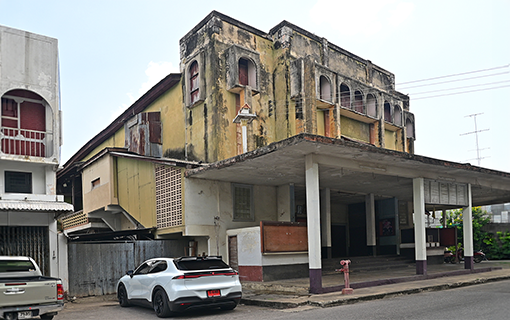
A trace of the past — the old cinema known as “Kru Tawee Theatre”
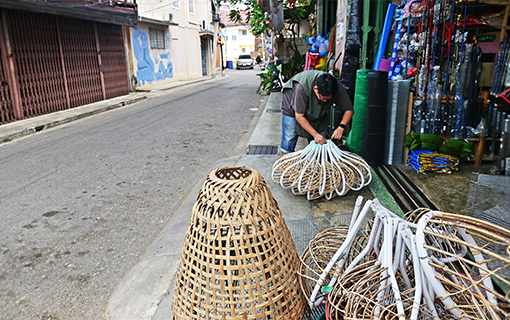
A glimpse of traditional life — a shop selling fruit-picking tools and handmade fishing baskets
If you visit at noon, you may feel the town is quiet, almost empty.
But that is not absence.
It is rhythm.
Photharam comes alive:
- Late afternoon to evening
- Weekends, when riverside walking markets appear
- When locals, not tourists, become the main energy of the town
To experience Photharam properly, you must adjust to its pace, not the other way around.
Pacific Leisure Perspective
Photharam is a powerful example of community-based, low-impact tourism:
- No large-scale commercialization
- No artificial reconstruction
- No separation between “tourist zone” and “local life.”
What you experience here is not staged.
It is simply… real.
Travel with Pacific Leisure
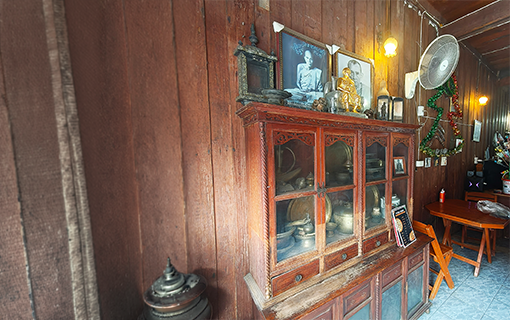
A surprising sight — who would have thought this was a pizza shop?
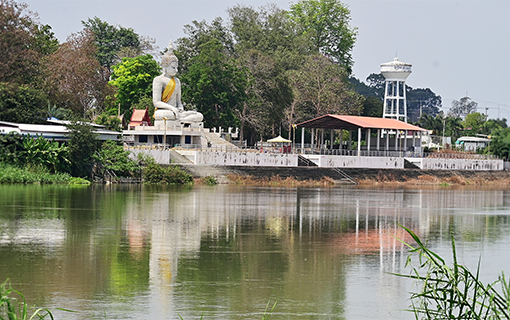
Luang Pho Pathom Sompratthana at Wat Muang by the Mae Klong River
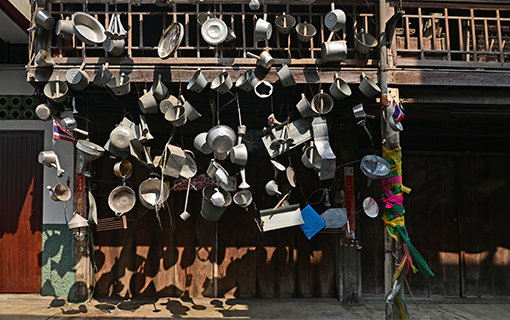
A striking hanging art installation along Lertpanich Road (near Photharam Railway Station)
Discover places where heritage is not displayed but lived.
Editor in Chief : Nampetch Siramanon
Editor: Pacific Leisure (Thailand)
Content Creator : Mr. Saroj Na Ayutthaya
Navigate
Terms & Privacy
Pacific Leisure (Thailand) Limited
No. 888/154, Mahatun Plaza Bldg., 15th Floor,
Ploenchit Road, Lumpini, Pathum Wan,
Bangkok 10330, Thailand
Phone : +66 22 542 966
Mobile : +66 63 224 1384, +66 81 138 2983
Email : info@pacificleisureth.com
Website : https://www.PacificLeisureTH.com
(TAT) Licensed No: 11/00161