One Day, One Train, One Bowl of Noodles A Riverside Escape to Chachoengsao
Some trips don’t require airports.
Just a train ticket.
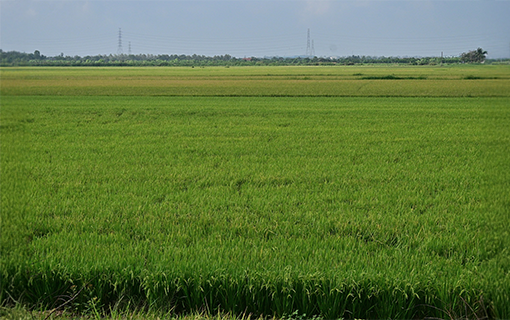
Lush green rice fields stretching endlessly along the railway
Eighty-two kilometers east of Bangkok lies Chachoengsao, or “Paed Riew” as locals still fondly call it. Close to the capital, yet culturally distinct, this historic province carries layers of stories — from Dvaravati and Khmer traces to Ayutthaya and early Rattanakosin influences.
Most visitors head straight to the famed Luang Pho Sothon.
We didn’t.
Instead, we chose something slower.
08:00 — Board the Train
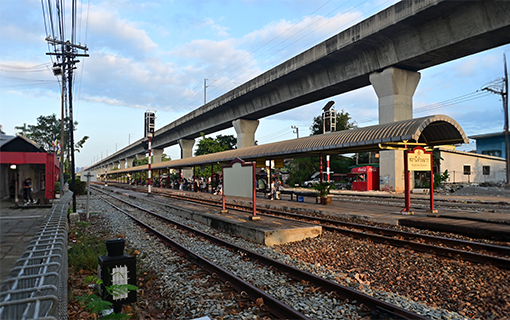
Hua Mak Railway Station — the starting point of our slow journey.
The day begins at Hua Mak Station.
Train No. 283 (Bangkok–Chuk Samet).
One hour.
Ten baht.
Yes, ten.
Weekend trains are lively — students, families, small groups escaping the city heat. The rhythm of the tracks sets the tone: this is not a rushed trip.
This is a local one.
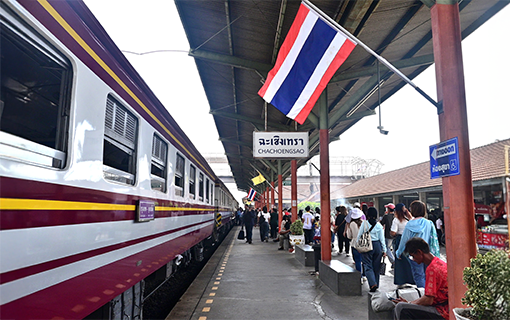
Chachoengsao Railway Station — a quiet arrival in Paed Riew.
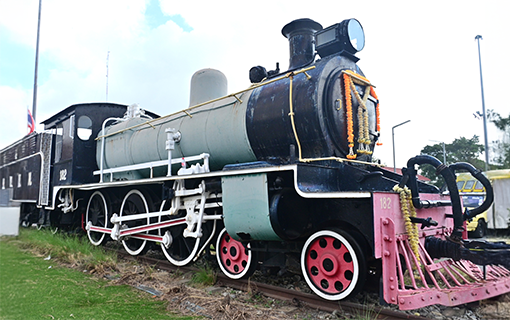
A vintage locomotive displayed proudly in front of Chachoengsao Station.
09:30 — Songthaew to Ban Mai 100-Year Market
From Chachoengsao Station, hop onto a white songthaew heading to Ban Mai Market, also known as the 100-Year-Old Market.
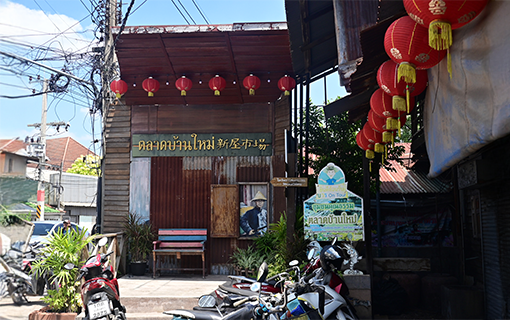
The entrance to Ban Mai 100-Year Market, welcoming visitors into the old riverside community.
Despite the name “Ban Mai” (New Village), this riverside wooden community has stood for over a century along the Bang Pakong River. The houses stretch in a long parallel line facing the water — a reminder that this was once a port town where boats were lifelines for trade.
Today, it is a living heritage corridor.
10:00 — Walk First. Buy Later.
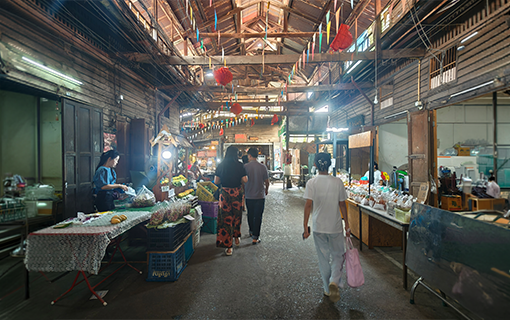
First glimpse of Ban Mai Market — wooden façades and timeless charm.
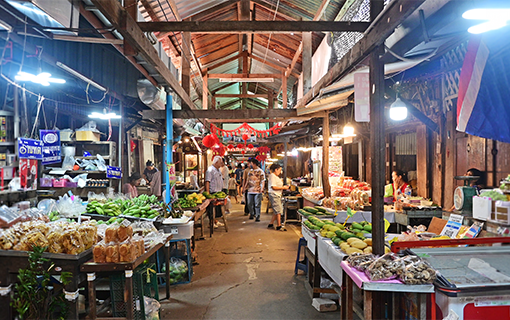
A raw and authentic corner of the market — beautifully unpolished.
The golden rule of Ban Mai:
Walk to the end before committing.
The market unfolds slowly — wooden façades, narrow alleys, river glimpses, and food at every turn.
Fresh coconut pancakes.
Curry puffs.
Traditional Thai sweets.
Herbal drinks in glass bottles.
We try to stay disciplined.
We fail.
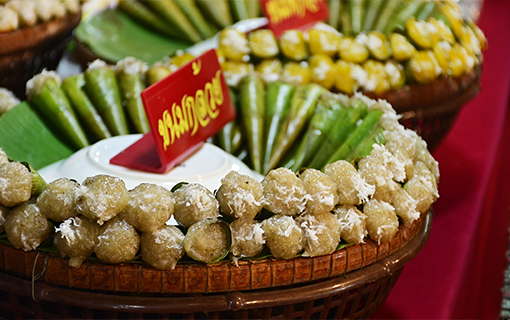
Je Pa’s banana cakes — some say you can guess the flavor just by the way the banana leaves are folded.
A few pieces of babin and crispy pastries find their way into our hands.
This is part of the ritual.
10:45 — Pause at Pun Tao Kong Shrine
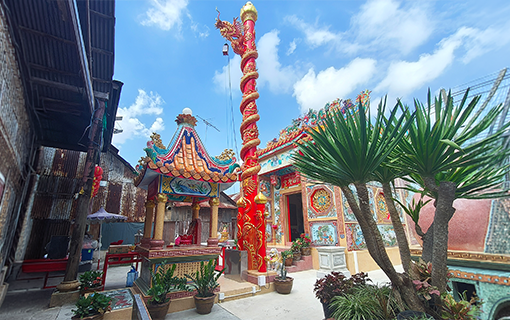
Pun Tao Kong Shrine — a spiritual heart of the community.
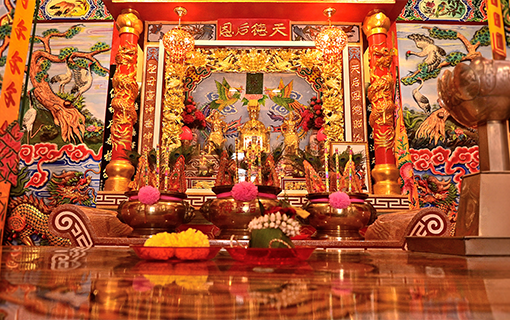
The statue of Pun Tao Kong inside the shrine.
Halfway along the market stands the Pun Tao Kong Shrine — deeply respected by generations of the local Chinese-Thai community.
We cool down with chrysanthemum tea, offer a quiet prayer, and take a breath.
Markets are not just about commerce.
They are about continuity.
11:30 — Architecture & Riverside Life
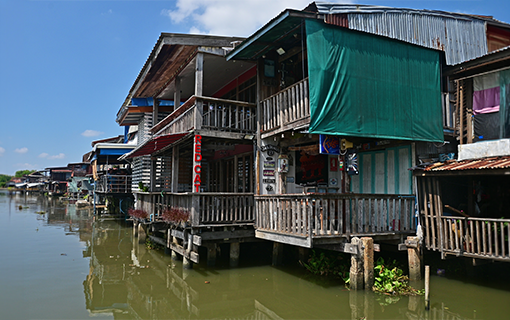
An old wooden house along the Bang Pakong River.
Old wooden homes lean gently toward the river. Some families still live above their shops.
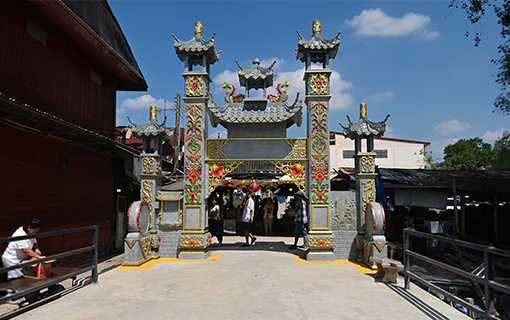
The riverside gate near the old pier area of the market.
Before the pandemic, long-tail boat tours and Thai dance performances animated the waterfront.
Some activities are gradually returning — and by midday, the crowd thickens. Recovery is visible. The community feels alive again.
Sustainability here isn’t a slogan.
It’s small businesses reopening their doors.
12:30 — Noodle Time (Finally)
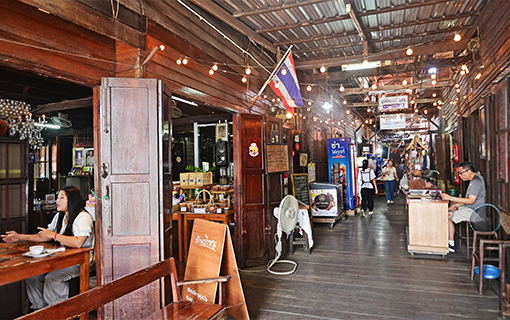
Pa Noo’s riverside eatery by the Bang Pakong River.
Riverside noodle shops compete gently for attention:
- Duck noodles rich and fragrant
- Fish ball noodles made fresh
- Simple rice plates from long-standing family kitchens
- Papaya salad with serious spice
Pick a riverside table. Watch the Bang Pakong flow by. Let lunch stretch a little longer than usual.
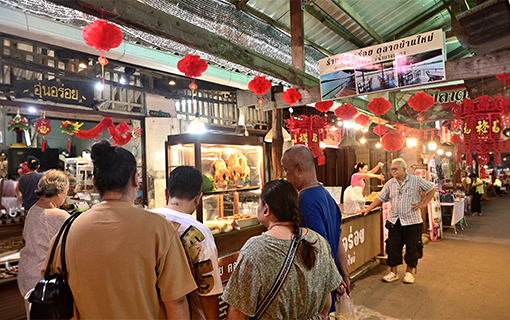
A comforting bowl of duck noodles
For coffee:
- Red Cat Café offers artsy riverside vibes
- Pa-Aey Café keeps it classic near the entrance
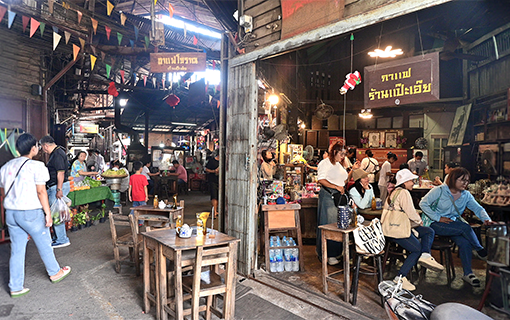
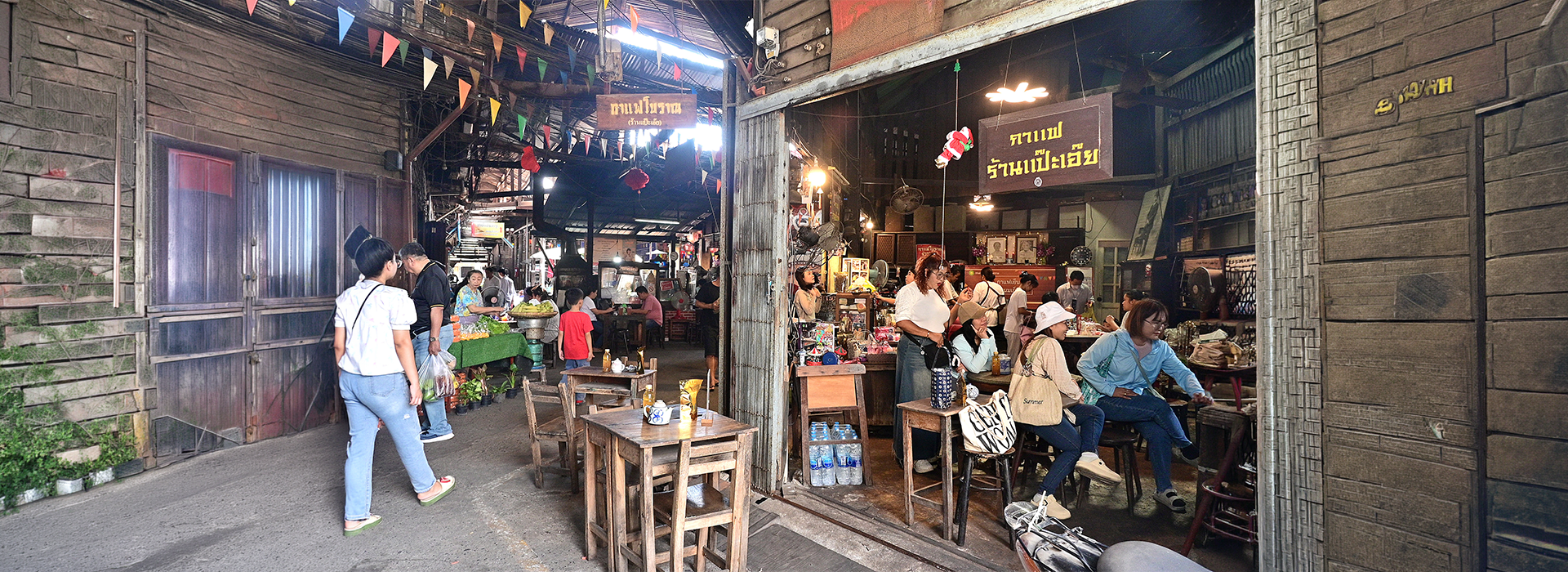
Pa-Aey Coffee Shop — a long-standing local café, famously the “first temptation” just steps from the entrance.
At the far end, Chonnicha Shop continues the rare craft of handmade peanut brittle and sesame candy — pressed, sliced, and shaped using traditional methods you rarely see anymore.
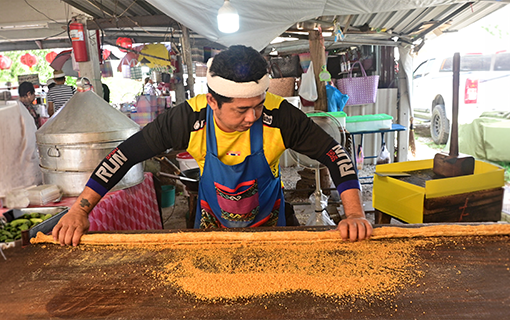
The traditional process of making peanut brittle at Chonnicha Shop — pressed, sliced, and shaped by hand.
A small but powerful preservation of food heritage.
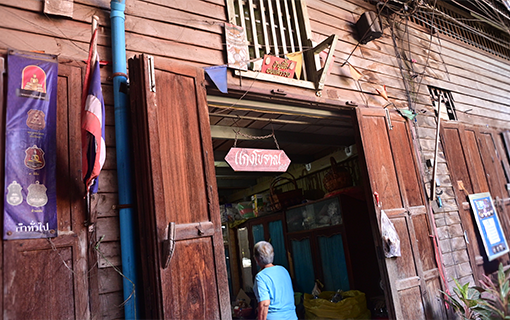
Old-style home curry — made in small batches and sold out quickly.
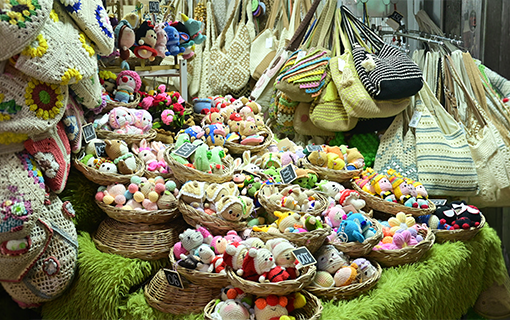
Traditional weaving and handicrafts — a corner for craft lovers.
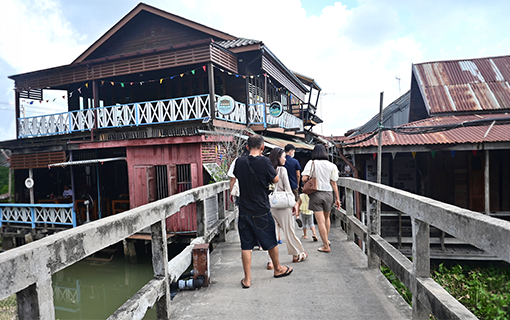
Small bridges crossing canals along the walking path.
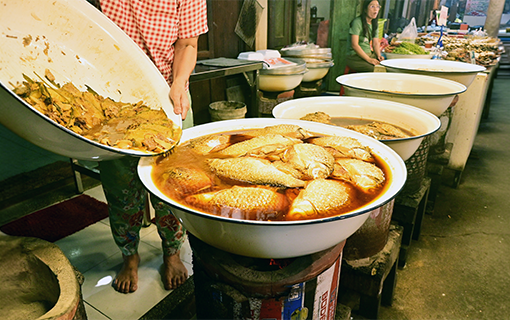
A shop specializing in slow-simmered sweet braised fish — mackerel and other varieties.
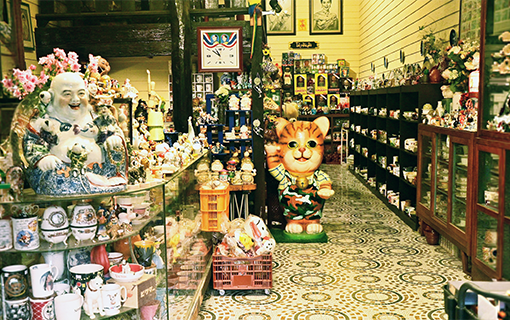
A ceramic shop filled entirely with handcrafted pieces.
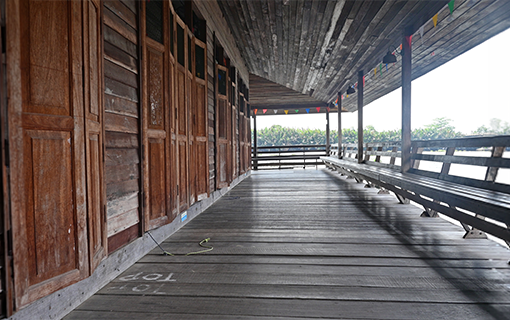
A large historic wooden riverside house — once the community’s cultural center and still open to visitors.
14:30 — A Quiet Temple Stop
Before heading back, take a short ride to Wat Pitulathirat-rangsarit (Wat Muang), about two kilometers from the railway station.
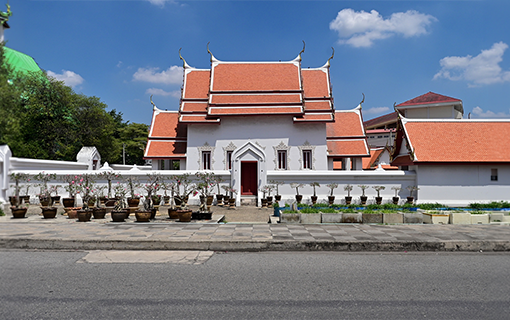
The ordination hall of Wat Pithula Thiracharangsan (Wat Muang), a royal temple built during the reign of King Rama III.
A royal third-class temple with an elegant ordination hall and a distinctive viharn framed by prangs at its corners. Even during renovation, the grounds offer calm — a gentle contrast to the lively market.
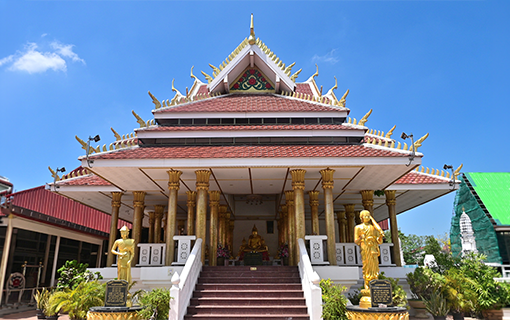
The temple pavilion of Wat Muang, housing a replica of Luang Pho Sothon.
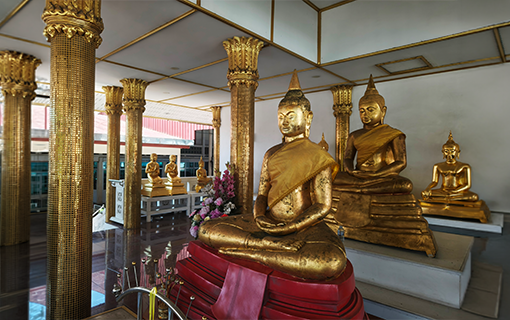
The replica statue of Luang Pho Sothon enshrined inside the pavilion.
A moment to reset before returning to the city.
16:00 — Train Back to Bangkok
Back to the station.
Back to the rhythm of the tracks.
Round-trip train fare: 20 baht.
Songthaew: 20 baht.
A full cultural day — less than the price of brunch in Bangkok.
Why This Day Trip Matters
- Low carbon footprint
- Direct support to local vendors
- Living heritage, not staged attractions
- Slow travel within reach of the city
Chachoengsao reminds us that meaningful journeys don’t require distance.
Sometimes they just require choosing the slower option.
Ready for Your Next Simple Escape?
Take the train.
Taste the noodles.
Walk the river.
Pacific Leisure believes in journeys that are accessible, authentic, and rooted in community.
Let’s travel local — meaningfully.
Editor in Chief : Nampetch Siramanon
Editor: Pacific Leisure (Thailand)
Content Creator : Mr. Saroj Na Ayutthaya
Navigate
Terms & Privacy
Pacific Leisure (Thailand) Limited
No. 888/154, Mahatun Plaza Bldg., 15th Floor,
Ploenchit Road, Lumpini, Pathum Wan,
Bangkok 10330, Thailand
Phone : +66 22 542 966
Mobile : +66 63 224 1384, +66 81 138 2983
Email : info@pacificleisureth.com
Website : https://www.PacificLeisureTH.com
(TAT) Licensed No: 11/00161