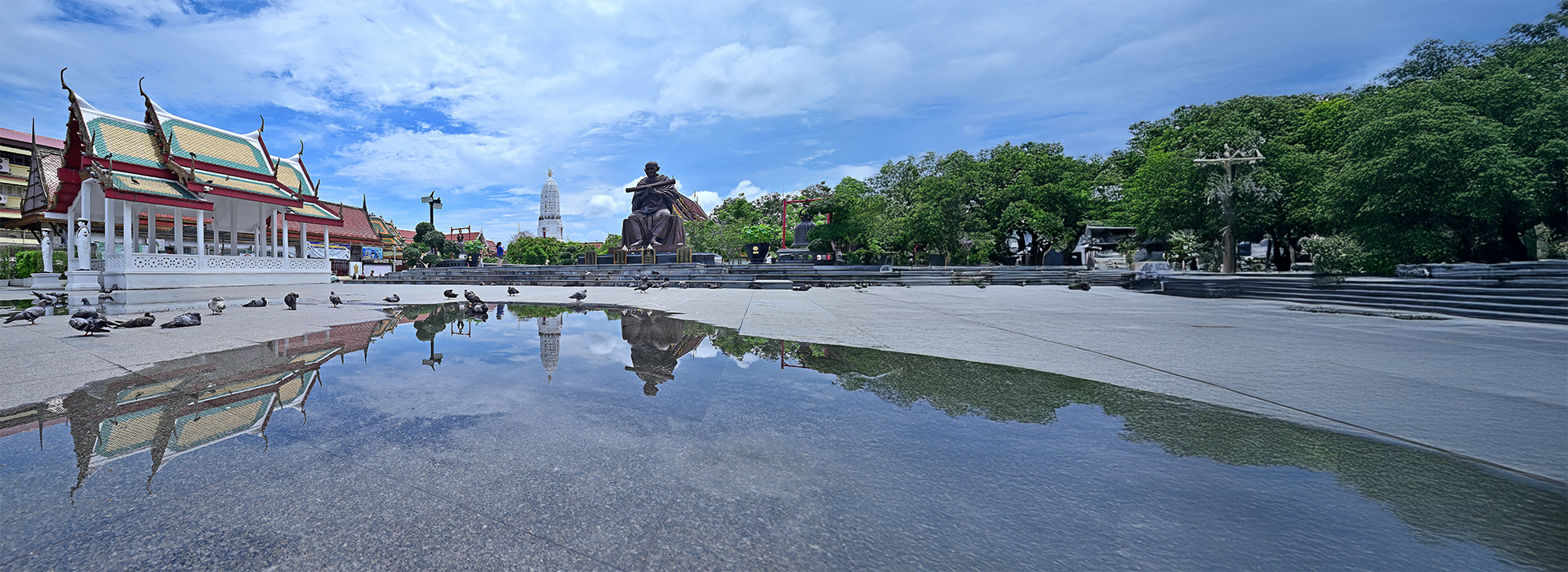
Nine Temples, One River, One New Beginning
A New Year story, told in one day
Before the New Year arrives, before the Buddhist Era turns to a new number, there is a quiet tradition many Thais return to. It is called paying respect to nine temples.
Not as a superstition, but as preparation.
A way of washing the heart clean before stepping into a new year. For those living in Bangkok, the journey feels almost inevitable. Rattanakosin Island and the Thonburi side are lined with temples, many of which were built during the Ayutthaya period and the early years of the Rattanakosin Kingdom. Ancient walls, old riverbanks, and stories layered gently over time.
On this day, the route follows the Chao Phraya River, sometimes directly beside it,
sometimes a short walk away, sometimes along a quiet canal.
A full day. Nine temples. One continuous story.
Morning — The Journey Begins
The day begins early, when Bangkok has not yet decided to be loud. At Wat Yannawa, near Taksin Bridge on Charoen Krung Road, the boat-shaped chedi waits as it always has.
Built during the reign of King Rama III, the junk-shaped chedi reminds visitors of trade, travel, and movement. Inside the temple grounds stand the royal monument of King Rama III, the Tripitaka Hall, and Phra Phuttha Chao Fa Thep Phrommalikhit. Here, the first incense is lit. The year begins with departure.

The Junk-Shaped Chedi at Wat Yannawa, a distinctive monument symbolizing maritime trade and journeys, built during the reign of King Rama III.
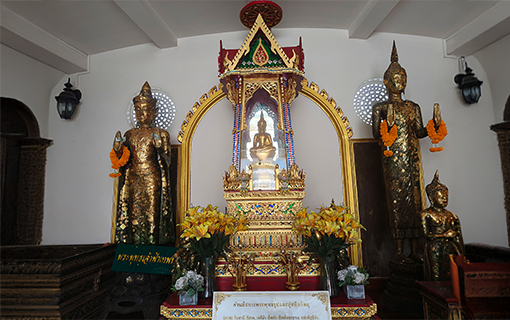
Phra Phuttha Chao Fa Thep Phrommalikhit, the revered Buddha image enshrined at Wat Yannawa, embodying grace and serenity.
A short journey along the river leads to Wat Ratchaburana (Wat Liap), near Pak Khlong Talat and Phra Phuttha Yodfa Bridge. This temple stands quietly beside old markets and old routes. Inside are Phra Buddha Prang, Phra Buddha Maha Racha, the principal Buddha image in the Ubosot, and the shrine of Goddess Thapthim. Here, prayers feel grounded and rooted in daily life, effort, and endurance. Gratitude finds its place.
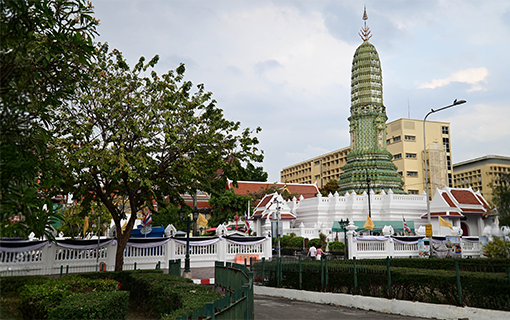
Phra Buddha Prang at Wat Ratchaburana (Wat Liap), an ancient Buddha image reflecting the spiritual heritage of early Rattanakosin Bangkok.
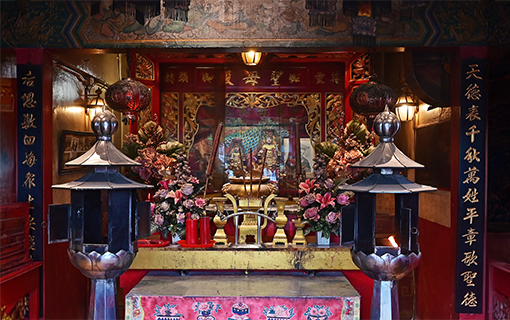
The Shrine of Goddess Thapthim at Wat Ratchaburana (Wat Liap), a place of devotion blending Thai and Chinese beliefs.
Late Morning — Stepping Away from the River
The route briefly leaves the main river. A quieter path appears. At Wat Anongkharam, on Somdet Chao Phraya Road in Khlong San, the temple rests beside a canal rather than the river itself. Built during the reign of King Rama III, this royal second-class monastery feels calm and contained. Inside the Ubosot, the principal Buddha image sits in stillness. Within the Viharn stands Phra Phuttha Chulanak, a Sukhothai-period Buddha image in the posture of Mara Subduing. Here, the pace slows. Strength feels quiet. The heart steadies.

The covered walkway leading from the Viharn to the Ubosot at Wat Anongkharam, offering a quiet transition between sacred spaces.

The principal Buddha image inside the Ubosot of Wat Anongkharam, radiating calm and contemplative stillness.
Midday — Returning to the Flow
Back along the riverbank, Wat Prayurawongsawas rises near Memorial Bridge on the Thonburi side. The great white chedi—Phra Borommathat Maha Chedi stands as a symbol of balance and order. Inside the Ubosot is Phra Buddha Dhammavichetsadasda, while a riverside walkway connects this temple gently to the next. Here, balance is not wished for; it is observed.
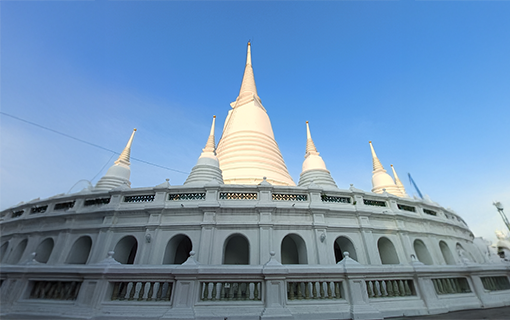
Phra Borommathat Maha Chedi at Wat Prayurawongsawas, a majestic white stupa standing as a symbol of balance and faith by the river.
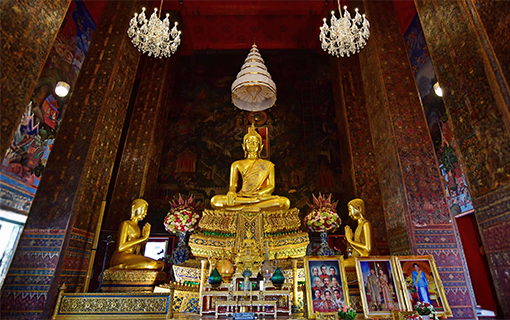
Phra Buddha Dhammavichetsadasda, the main Buddha image in the Ubosot of Wat Prayurawongsawas, representing moral clarity and wisdom.
Following the riverside path leads to
Wat Kalayanamit. Facing the Chao Phraya, this royal monastery houses Phra Buddha Trai Rattananayok, known affectionately as Luang Pho To. The main Viharn, Ubosot, sermon hall, and Chinese-style chedis, including the Chedi of Chao Phraya Nikornbodin and the Ta-Chin Chedi, reflect the shared faith of Thai and Chinese communities. Here, prayers ask for protection, for safe passage through the unknown year ahead.
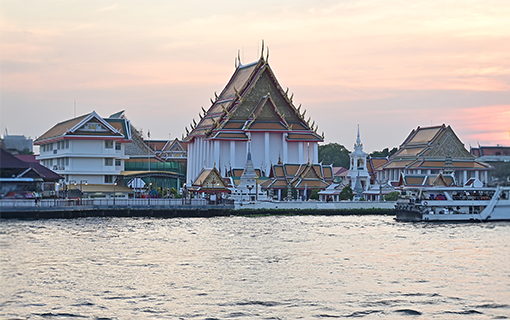
Wat Kalayanamit Woramahaviharn viewed from Rajinee Pier on the Phra Nakhon side, with the Chao Phraya River flowing between devotion and daily life.
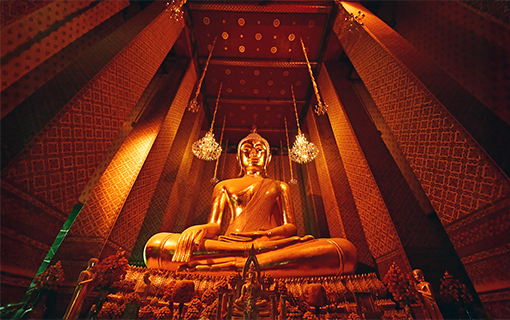
Phra Buddha Trai Rattananayok (Luang Pho To), the revered giant Buddha image at Wat Kalayanamit, a symbol of protection and steadfast faith.
Afternoon — Awakening
As the day tilts toward evening, the river opens its most familiar view. Wat Arun Ratchawararam stands luminous on the Thonburi bank. The central prang, satellite prangs, Ubosot, Viharns, Mondop of the Buddha’s Footprint, and the Chulamani Chedi catch the changing light. Within the smaller viharn rests Phra Phuttha Chumphunut Mahaburutsalakkhana Asityanubophit, enshrining relics of the Buddha within the head. This is the moment of awakening. The day turns inward. So does the journey.
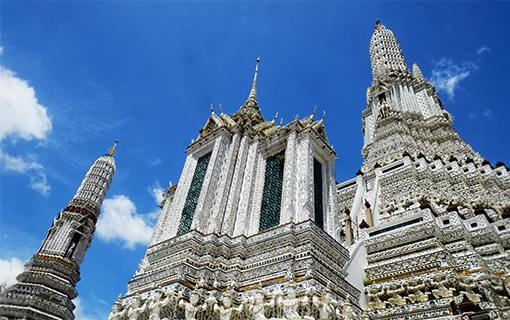
The Mondop and the principal prang of Wat Arun Ratchawararam, rising gracefully along the Thonburi riverbank.
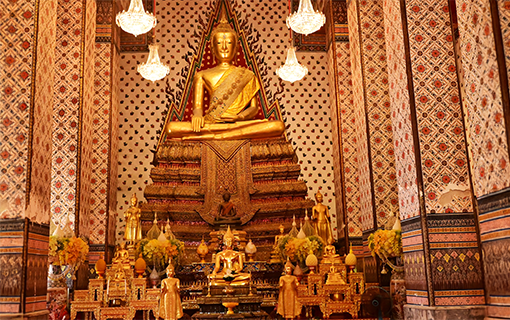
Phra Phuttha Chumphunut Mahaburutsalakkhana Asityanubophit at Wat Arun, a sacred Buddha image enshrining relics within its head.
Late Afternoon — Reflection
Across the river lies Wat Rakhang, a royal monastery long associated with
Somdej Phra Phutthachan (To Phrommarangsi). The Ubosot, prang, Tripitaka Hall, and the image of the smiling principal Buddha create a sense of gentle wisdom. Bells once used to mark time now echo memory. The pace slows again.
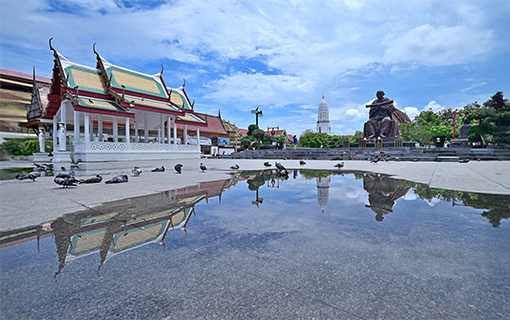
A riverside view of Wat Rakhang Khositaram, featuring (from left) the riverside pavilion, the prang, and the statue of Somdej Phra Buddhachan (To Phrommarangsi).
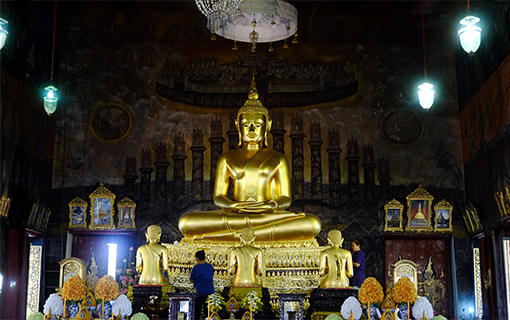
The “Smiling Buddha” principal image at Wat Rakhang, known for its gentle expression symbolizing compassion and wisdom.
Evening — Rest and Completion
As daylight fades, the journey reaches Wat Pho, near Tha Tien. Inside are the Ubosot, Phra Buddha Deva Patimakorn, four directional chedis and viharns, Phra Maha Chedi Si Sanphetdayan, clusters of chedis, Tripitaka Hall, and the great Reclining Buddha. This is where the body and heart rest together. Rest, too, is merit.
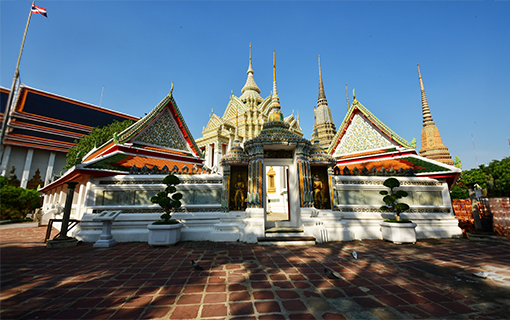
A group of ancient chedis at Wat Pho, reflecting refined craftsmanship and layered Buddhist symbolism.
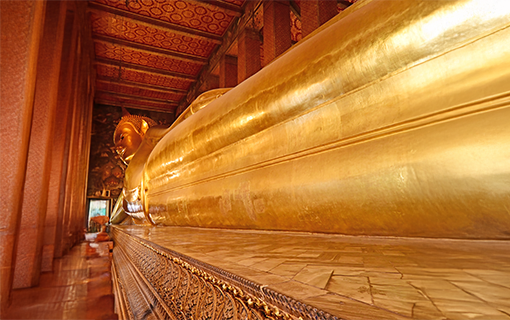
The Reclining Buddha enshrined within the Viharn at Wat Pho, representing serenity, rest, and the moment before enlightenment.
Night — The Promise
The final destination is Wat Phra Kaew, within the Grand Palace grounds beside Sanam Luang. The complex unfolds in three main zones: the Ubosot group, the Phra Sri Rattana Chedi group, and auxiliary buildings.
At its heart sits Phra Kaew Morakot, the Emerald Buddha not a place for asking, but for remembering responsibility. The final bow is made. No wishes remain.

Wat Phra Kaew (Temple of the Emerald Buddha) at night, captured from the City Pillar Shrine, glowing quietly at the heart of Bangkok.
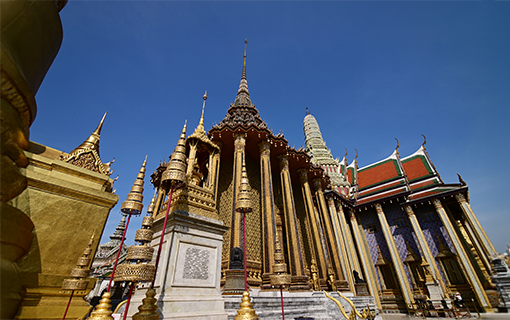
Prasat Phra Thep Bidorn, part of the raised platform complex at Wat Phra Kaew, honoring the kings of the Chakri Dynasty.
The journey ends as it began by the river.
Nine temples in one day. From early morning to night. By BTS, MRT, and the Chao Phraya Express Boat. A complete circle. Not only of places but of the heart. And when the New Year arrives, it finds you ready.
Editor in Chief : Nampetch Siramanon
Editor: Pacific Leisure (Thailand)
Content Creator : Mr. Saroj Na Ayutthaya
Navigate
Terms & Privacy
Pacific Leisure (Thailand) Limited
No. 888/154, Mahatun Plaza Bldg., 15th Floor,
Ploenchit Road, Lumpini, Pathum Wan,
Bangkok 10330, Thailand
Phone : +66 22 542 966
Mobile : +66 63 224 1384, +66 81 138 2983
Email : info@pacificleisureth.com
Website : https://www.PacificLeisureTH.com
(TAT) Licensed No: 11/00161